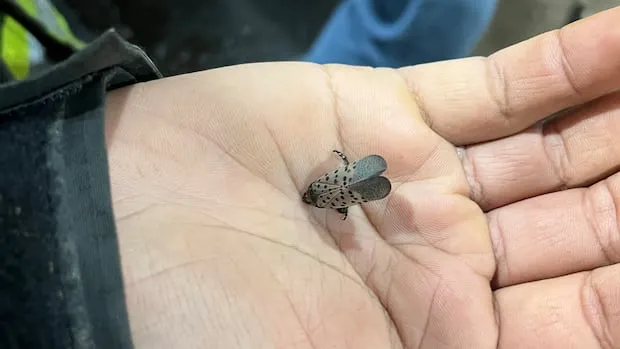
A recent sighting of the invasive spotted lanternfly in St. Catharines, Ontario, has heightened fears about its potential threat to local industries. This insect poses significant risks to agriculture, particularly the grape industry.
The spotted lanternfly, known scientifically as Lycorma delicatula, was first detected in the U.S. in 2014. It can feed on more than 100 species of trees and plants. The Canadian Food Inspection Agency has reported no established populations of this invasive species in Canada.
Key facts:
- A spotted lanternfly was discovered in St. Catharines, Ontario.
- The insect has been reported in Hamilton, Windsor-Essex, and Niagara regions of Ontario.
- The species has been regulated in Canada since 2018.
- Adult spotted lanternflies are typically about three centimetres long and 1.2 centimetres wide.
Experts warn that if left uncontrolled, the insect can cause major economic damage to the grape and wine industries. Aidan Dagg, a local entomologist, expressed concern about the implications for plant health. He stated, “I’m a huge bug nerd,” reflecting his dedication to studying these pests.
There were 30 dead spotted lanternflies found in a shipment earlier this year, indicating potential spread issues. The insect can survive in both hot and cold temperatures, which complicates management efforts.
As authorities monitor the situation closely, further developments are expected regarding containment measures. The next steps will likely involve increasing public awareness and monitoring for additional sightings.
About The Author