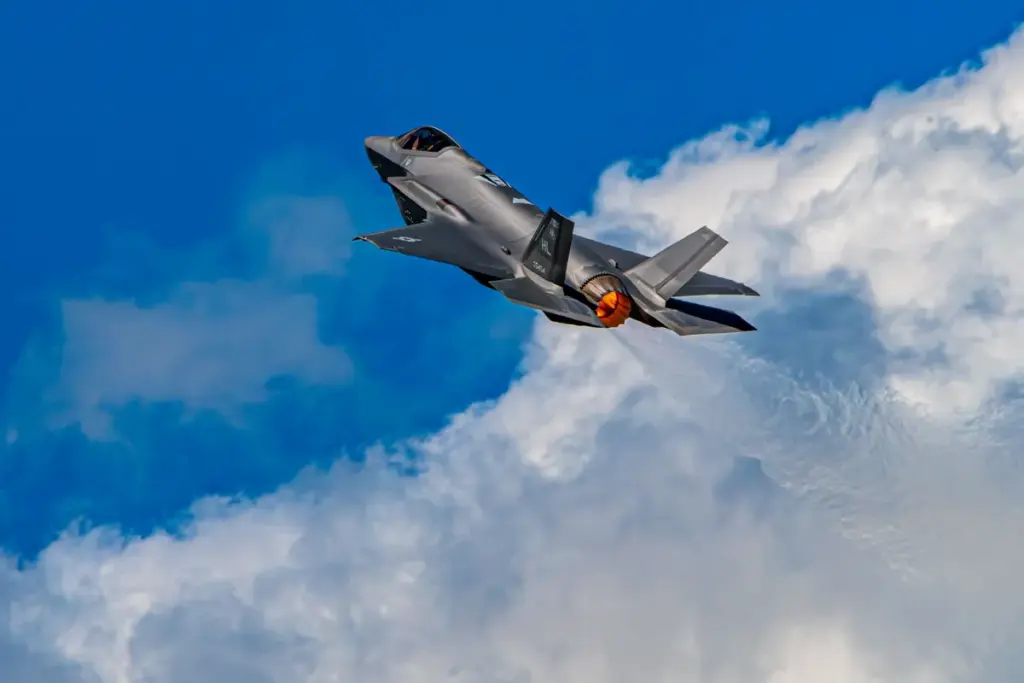
Canada’s decision on its $19 billion CAD plan to acquire 88 F-35A Lightning II fighter jets remains unresolved as of April 2026. The review process started in March 2025 but has not yielded a timeline for completion.
Before this situation, Canada intended to replace its aging CF-18 fleet with the F-35. This program was expected to enhance the Royal Canadian Air Force’s capabilities within NORAD and NATO. However, the ongoing uncertainty raises concerns about Canada’s defense posture.
The decision delay has prompted Saab to propose the Gripen as an alternative. Saab’s offer includes assembling the aircraft in Canada and transferring significant intellectual property. This option may impact Canada’s strategic choices moving forward.
Meanwhile, Canada has secured funding for the first 16 F-35s and made payments to preserve production slots. Yet, delays have allowed other nations like Germany and Finland to reaffirm or expand their commitments to the F-35 program.
The Pentagon recently awarded Lockheed Martin a $177.5 million contract for three new F-35 flight science aircraft, which are expected to be delivered by 2031. This contract highlights ongoing global interest in the F-35 despite Canada’s indecision.
Maj. Gen. Chris McKenna emphasized that “NORAD needs an aircraft that has overmatch over adversaries.” As Canada evaluates its options, maintaining competitive military capabilities remains critical.
David McGuinty stated, “We are taking the necessary time to study very, very closely the question of the fighter fleet.” The outcome of this review process is still uncertain, leaving many questions about Canada’s future defense strategy.
The AIM-120D-3 missile upgrade enhances the CF-18’s ability to engage threats at long range. This improvement indicates a focus on maintaining current capabilities while future decisions loom.
About The Author