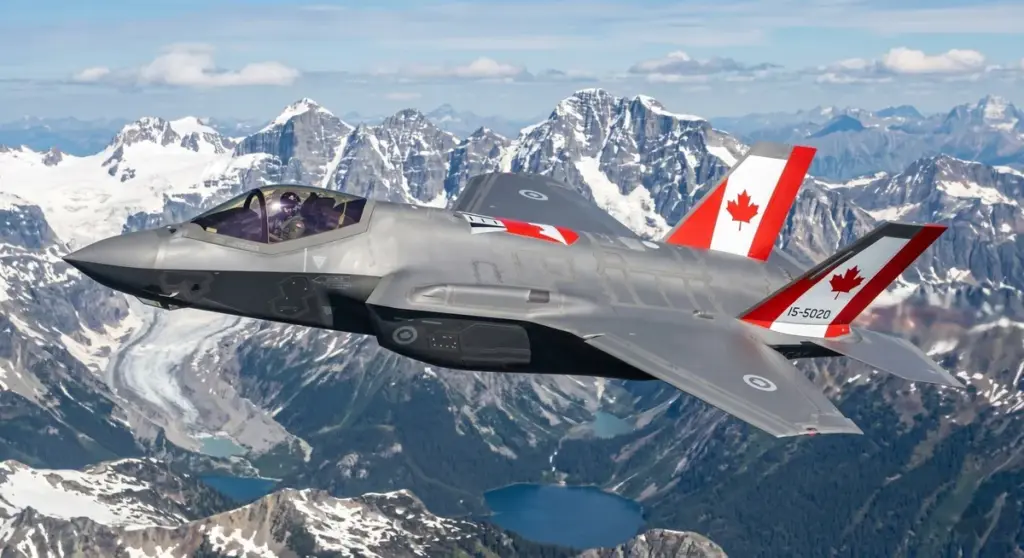
“The review of the purchase of the F-35s is continuing,” said David McGuinty. Canada faces uncertainty regarding its plans for a $19 billion CAD acquisition of 88 F-35A Lightning II fighter jets.
The review of the F-35 purchase began in March 2025. It disrupted an agreement Canada signed in early 2023 to procure these advanced aircraft. Prime Minister Mark Carney ordered this review amid rising public sentiment questioning reliance on U.S. defense systems.
Officials from the Royal Canadian Air Force (RCAF) maintain that the F-35 remains the best option for replacing the aging CF-18 fleet. However, Saab has proposed a mixed fleet approach, suggesting that Canada also operate Gripen fighter jets. Saab’s offer includes assembling Gripens in Canada and transferring significant intellectual property.
Funding for the first 16 F-35s is secured. Canada has also made payments to preserve production slots for future jets. Additionally, over 110 Canadian companies are participating in the F-35 program, which has generated approximately $3 billion CAD in contracts.
Key facts:
- The HIMARS deal with the U.S. costs an estimated 2.4 billion CAD.
- Canada expressed interest in buying 26 HIMARS systems.
- Germany and Finland have accelerated their F-35 procurements amid growing threats from Russia and China.
Lt.-Gen. Mike Wright emphasized the importance of long-range precision strike capabilities, stating, “We’re saying the HIMARS system is the long-range precision strike system that we need for land operations.” Meanwhile, Dave Perry noted a contradiction between government spending policies and actual expenditures on U.S. defense systems.
The purchase of F-35s was initially seen as a natural continuation of Canada’s defense partnership with its allies. However, uncertainties linger regarding how many HIMARS systems will be acquired and any potential delivery timeline remains unclear.
About The Author