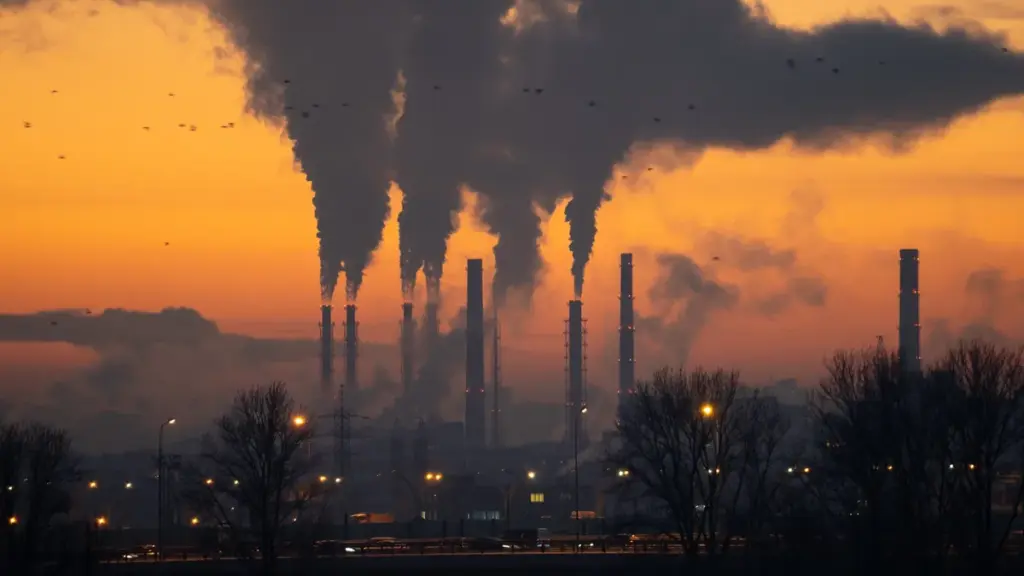
The decline in air pollution due to regulations has unexpectedly led to dimmer clouds and accelerated ocean warming, complicating climate projections. Marine cloud reflectivity has dropped by roughly 2.8 percent per decade across the North Atlantic and Northeast Pacific.
As pollution controls tightened, airborne aerosols decreased. This reduction resulted in fewer cloud droplets, contributing to the dimming of clouds. Consequently, the cloud radiative effect weakened as marine clouds brightened less and covered less area.
India faces severe air quality issues. The country accounts for nearly 70 percent of all air pollution-related deaths worldwide. In 2024, a report identified that 94 of the 100 most polluted cities were in India.
In India, a significant increase in PM 2.5 concentration correlates with mortality rates. A 10 cubic meter increase in PM 2.5 concentration leads to an 8.6 percent rise in mortality. Approximately 1.7 million people died from air pollution-related causes in India in 2022.
On Lag B’Omer, pollutant concentrations are significantly higher than on ordinary days due to bonfires—recorded levels are seven to twenty times greater.
Dr. Knut von Salzen noted, “We may be underestimating warming trends because this connection is stronger than we knew.” This highlights the interconnectedness of air quality and climate dynamics.
Dr. Zohar Barnett-Itzhaki emphasized the seriousness of these pollutant spikes: “Over the years, the air pollutant concentrations measured on Lag B’Omer have been seven to twenty times higher than those measured on ordinary days.” These findings raise concerns about public health and environmental impacts.
The situation remains uncertain as researchers continue to study these complex interactions between air pollution and climate change.
About The Author