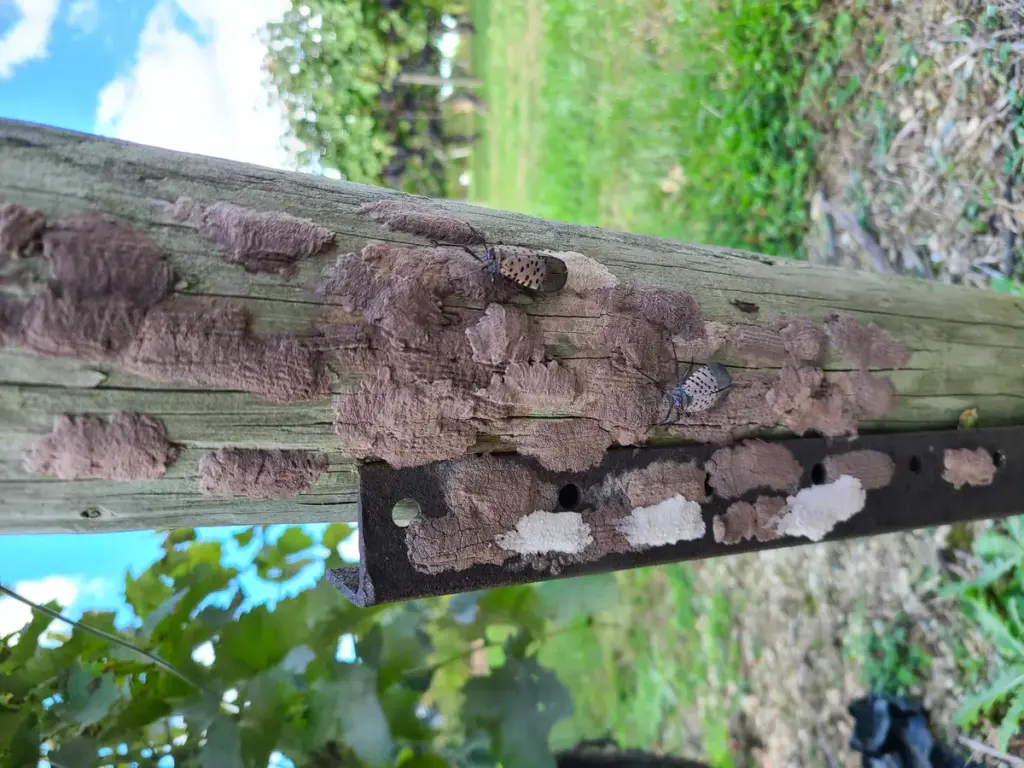
Aidan Dagg found a dead spotted lanternfly in St. Catharines, Ontario, raising alarms about its potential impact on the province’s $5.4 billion grape and wine industry. The insect is an invasive species that threatens agriculture across North America.
The spotted lanternfly was first detected in the U.S. in 2014 and has since spread to 19 states. It can feed on more than 100 species of trees and plants, including grapevines. Feeding by spotted lanternflies can cause significant damage to host plants, leading to their decline or death.
There are currently no established populations of spotted lanternfly in Canada. However, experts warn it poses a serious threat to vineyards and fruit trees if it becomes established. Diana Mooij from Natural Resources Canada stated, “The spotted lanternfly can feed on more than 100 species of trees and plants and poses a significant threat to the grape and wine industries.”
Spotted lanternflies can travel in shipments and latch onto vehicles and trains. They can survive both hot and cold temperatures, making them resilient to winter conditions. Chris Duyvelshoff noted, “It really goes to show with this invasive species is the route of transportation of it. It’s a pest that’s very much moving based on human activity.”
Aidan Dagg reported finding 30 dead spotted lanternflies in a shipment he encountered. His report went to the Canadian Food Inspection Agency for further investigation.
The economic impact could be severe if the insect spreads. In Pennsylvania alone, infestations have caused annual losses exceeding $50 million. If infestations spread further, projected losses could reach $554 million.
Emily Posteraro emphasized the importance of vigilance: “We have a $5.4 billion grape and wine industry. That’s at stake, but we don’t know the numbers.” The next steps involve monitoring for additional sightings and implementing pest control measures.
About The Author