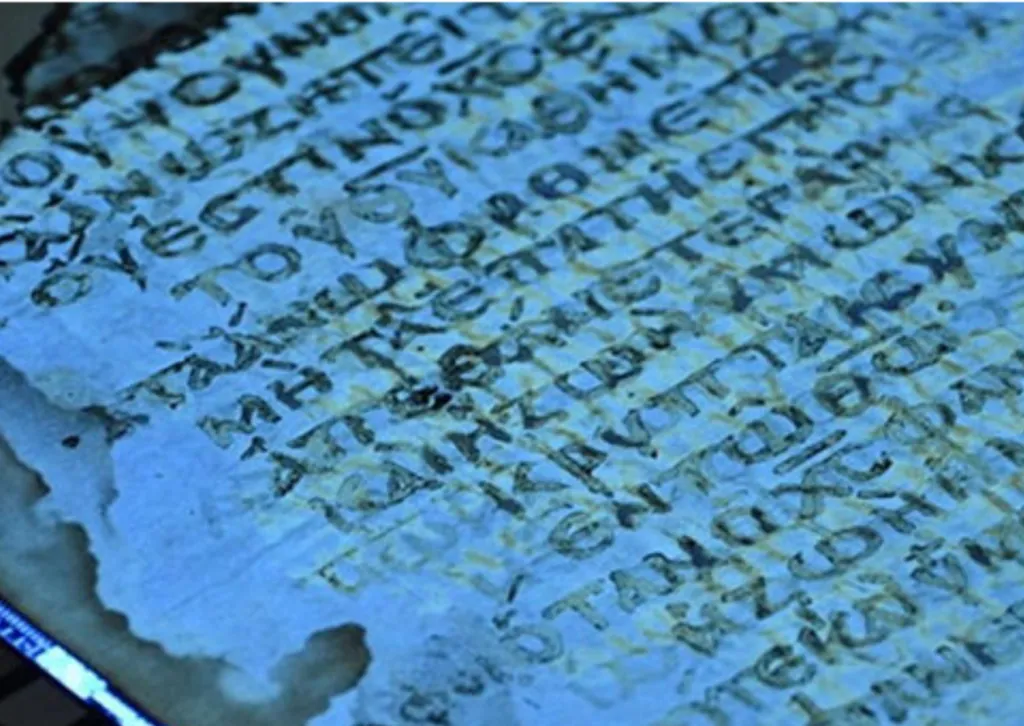
A team of researchers has successfully reconstructed 42 pages of lost material from the New Testament. This achievement offers unprecedented insights into early Christian reading practices.
The international team, led by the University of Glasgow, focused on an ancient manuscript known as Codex H. This manuscript, dating back to the 6th century, contained letters from the apostle Paul.
The Codex H was dismantled in the 13th century at the Great Laura Monastery on Mount Athos. Its remaining fragments were scattered across various European libraries.
The researchers utilized multispectral imaging to reveal traces of ink that are invisible to the naked eye. Radiocarbon dating confirmed the manuscript’s age as consistent with the 6th century.
The recovered pages include well-known passages from saint Paul’s letters and showcase ancient reading structures. Notably, Codex H features an “euthalian apparatus,” which consists of prefaces and explanatory notes.
This discovery is invaluable for understanding not only the content of the Scriptures but also their transmission and appropriation by early Christian communities. Saint James the Less, one of the twelve apostles and the first bishop of Jerusalem, is mentioned in these contexts.
Saint James was killed in 62 AD. His letter remains one of the books in the New Testament today.
A digital edition of the manuscript is now freely accessible for scholars and interested readers alike.
About The Author