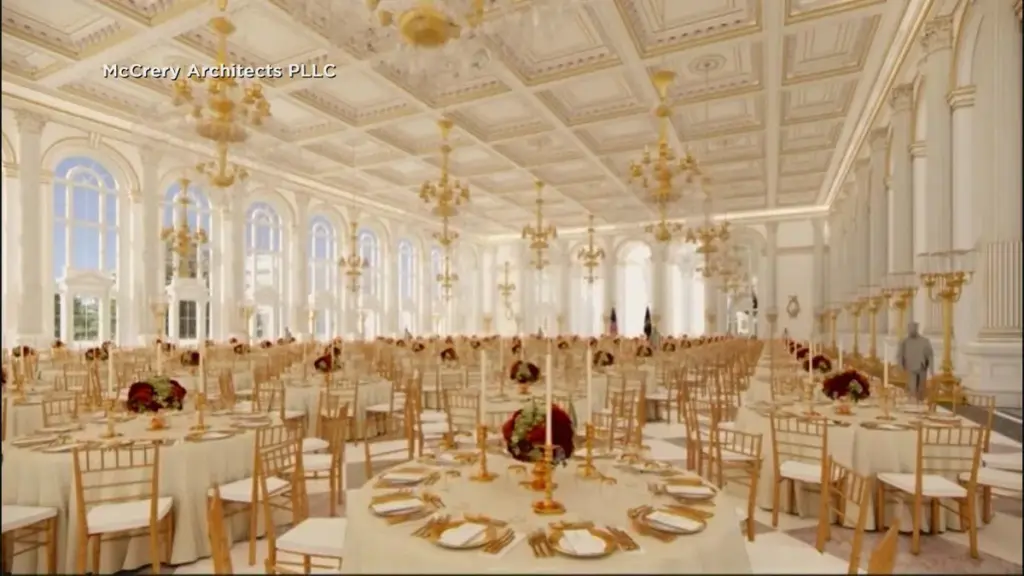
“Defendants have not, on this record, explained how, if at all, the injunction interferes with their existing plans for safety and security at the remaining portions of the White House during the construction project,” stated the Appeals Court Majority regarding the ongoing construction of the White House state ballroom.
The U.S. appeals court recently ruled to allow the construction to continue until April 17, 2026, despite a lawsuit filed by the National Trust for Historic Preservation. The ballroom project, which is estimated to cost $400 million, has been a contentious issue since it broke ground last October.
Judge Richard Leon, who presided over earlier proceedings, emphasized the need for congressional approval, stating, “The president is the steward of the White House for future generations of First Families. He is not, however, the owner!” This remark highlights the legal complexities surrounding the project.
Critics have labeled the ballroom construction a “vanity project,” arguing that it diverts attention and resources from more pressing national concerns. The Trump administration, however, has defended the project, asserting that no taxpayer dollars are being used and that it is essential for national security purposes. “No taxpayer dollars are being used for the funding of this beautiful, desperately needed, and completely secure (for national security purposes) ballroom,” a spokesperson stated.
The ballroom is expected to take at least two years to build, with the East Wing of the White House having been demolished to make way for the new structure. The construction project has been described as a passion project for Trump during his second term, further complicating its public perception.
As the legal battles continue, Carol Quillen, President of the National Trust, expressed her anticipation for further clarification from the district court, stating, “We appreciate the court of appeals acting quickly and await further clarification from the district court.”
Details remain unconfirmed regarding the exact implications of the appeals court’s ruling on the construction timeline. The split decision, with a 2-1 ruling, has raised questions about the future of the project and its adherence to legal requirements.