How it unfolded
As Good Friday approached on April 3, 2026, the atmosphere in Quebec was charged with both anticipation and concern. This year, the day was set to be particularly significant due to the adoption of a controversial law by the Quebec government that restricts public prayer. The law, which was enacted just before the holiday, prohibits the use of public spaces for collective religious practices unless explicitly authorized by municipal consent.
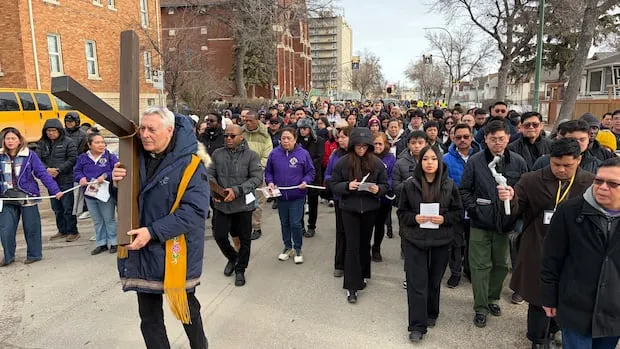
The implications of this law were felt acutely by many in the community, particularly those who participate in traditional religious observances. Last year, the procession of the Stations of the Cross in Montreal attracted nearly 1,000 participants, organized by Communion and Liberation Canada. However, this year, the law raised questions about the future of such events and the ability of believers to express their faith publicly.
On the day itself, the weather added another layer of complexity to the situation. A severe storm swept across Quebec, bringing with it significant snowfall, freezing rain, and strong winds. Reports indicated that up to 45 cm of snow was expected in certain regions, while northern areas could see as much as 10 mm of freezing rain. Wind gusts were forecasted to reach between 70 to 90 km/h in southern Quebec, creating hazardous conditions for anyone attempting to participate in outdoor religious observances.
Martin Laliberté, a vocal critic of the new law, expressed his concerns, stating, “Ce qui était un droit devient maintenant un non-droit,” which translates to “What was once a right is now a non-right.” His comments reflect a broader sentiment among believers who feel marginalized by the new regulations. Laliberté further noted that believers in society are becoming second-class citizens, deprived of the right to publicly manifest their faith like other citizens.
John Zucchi, another participant in the religious community, shared a different perspective on the significance of the event. He remarked, “Je pense que les gens sont touchés par la sobriété de l’évènement, par sa simplicité et par la dignité tranquille qui l’entoure,” indicating that many find solace in the simplicity and dignity of the observance, regardless of the challenges posed by the law and the weather.
As the day progressed, the combination of the law and the severe weather conditions left many wondering how such events would be conducted in the future. The procession, which has been a staple of Good Friday observances, faced uncertainty as participants grappled with both the legal restrictions and the harsh weather. The law’s impact on traditional practices has raised critical questions about religious freedom and the rights of individuals to gather and express their beliefs publicly.
Currently, the situation remains tense as community leaders and participants await further clarification on how the law will be enforced and what it means for future religious gatherings. The storm’s aftermath will also likely influence the discussions surrounding public safety and the ability to hold such events in adverse weather conditions.
This sequence of events matters significantly for those involved, as it highlights the ongoing struggle between religious expression and governmental regulation. The reactions from community members reflect a deep concern for the preservation of their rights and the ability to practice their faith openly, especially during significant religious observances like Good Friday.