What does Brad Gushue’s playoff loss mean for the future of curling?
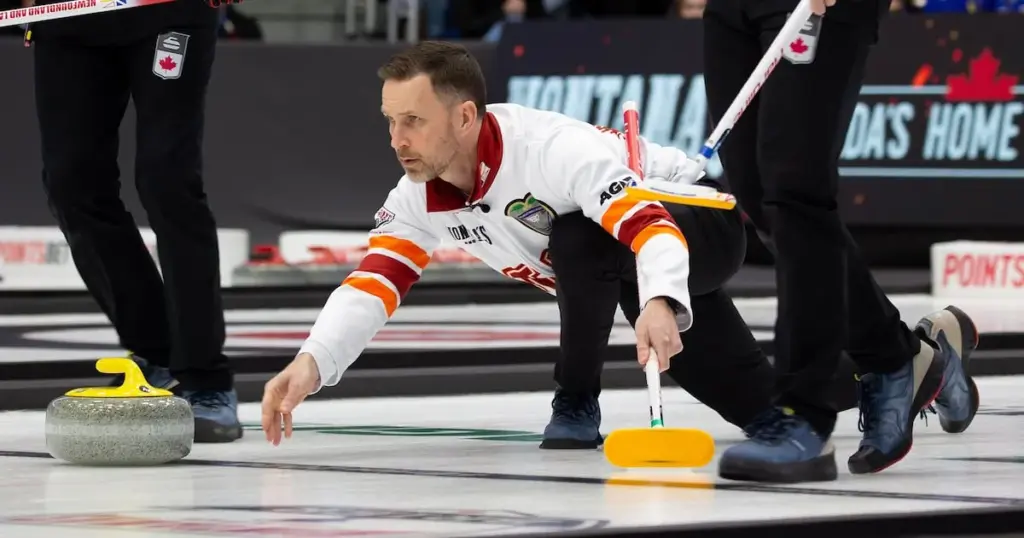
In a dramatic turn of events at the Brier, Brad Gushue’s quest for a record seventh Canadian title came to a close with a 7-5 playoff loss to Brad Jacobs. This match not only marked the end of Gushue’s illustrious career at the Brier but also raised questions about the future of competitive curling in Canada.
Gushue, who has secured six Canadian championships since his first win in 2017, was aiming to solidify his legacy as one of the sport’s greats. His elimination was particularly poignant as it was his last appearance at the Brier, a tournament that has defined much of his career. “This is Brad’s last Brier. They’re going to bring a lot of positive great energy for them and they’ll cheer our misses. We’re used to it,” noted Jacobs, highlighting the emotional atmosphere surrounding the match.
The playoff loss followed a decisive victory against Jayden King, where Gushue’s team triumphed with a score of 12-6, showcasing their skill with a remarkable three-point score in the seventh end. However, the momentum did not carry into the next game against Jacobs, who had recently led his team to an Olympic gold medal in Cortina, Italy, just two weeks prior to the Brier.
As the tournament progressed, Kevin Koe and Matt Dunstone were set to meet in a playoff between the top two seeds, with the winner earning a coveted spot in the final. Koe, who was named the first all-star team skip with an impressive 89 percent accuracy, has a storied history in the Brier, boasting 17 all-time playoff wins, second only to Gushue’s 20. Koe’s experience in eight Brier finals adds to the competitive landscape as teams vie for the championship.
The Brier champion will represent Canada at the men’s world championship, scheduled from March 27 to April 4 in Ogden, Utah. With Gushue’s departure from the tournament, the path is now clear for other teams to step into the spotlight. “I know what it’s all about for sure, but your best chance of winning this is to win (Saturday’s) game, even though there’s no guarantees,” Koe remarked, emphasizing the unpredictability of the sport.
As Gushue reflects on his career, which includes leading teams to Olympic gold in 2006 and bronze in 2022, as well as a world championship in 2017, the curling community acknowledges the impact he has had on the sport. His legacy will undoubtedly influence future generations of curlers.
While the immediate future of the Brier unfolds, uncertainties linger regarding the next steps for Gushue and his team. Details remain unconfirmed about whether he will pursue further competitive opportunities or transition into a different role within the sport. As the curling world watches closely, the next chapter for Gushue and the Brier remains to be seen.