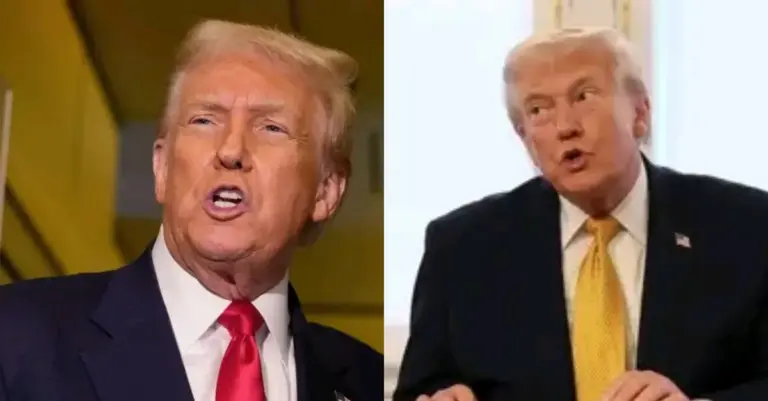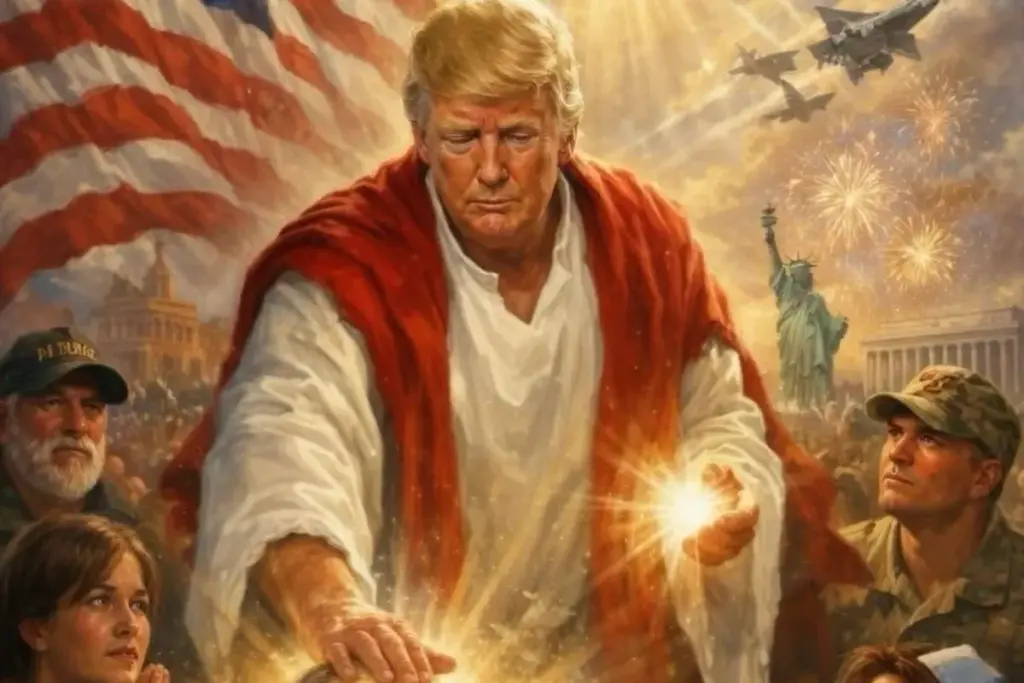
In a recent development, Donald Trump posted an AI-generated image on April 13, 2026, depicting him dressed in a white robe with a glowing hand over a sick man. This image, which included American symbols like the U.S. flag and bald eagles in the background, was intended to convey a message of healing. However, it quickly drew widespread criticism, particularly from conservative figures who deemed it blasphemous.
Prior to this incident, Trump had been vocal in his criticism of Pope Leo XIV for opposing the Iran war. The posting of the image came shortly after these remarks, suggesting a provocative intent. However, the backlash was swift and severe, leading to the image’s removal from his Truth Social account.
Trump claimed that he believed the image depicted him as a doctor rather than as Jesus Christ. This explanation did little to quell the outrage, as critics, including conservative influencer Riley Gaines and political activist Brilyn Hollyhand, expressed their disapproval. Hollyhand stated, “This is gross blasphemy. Faith is not a prop,” highlighting the deep offense taken by many.
The Knights Templar International also weighed in, demanding the removal of the image and a public apology from Trump, asserting that “God will not be mocked.” This sentiment resonated with many who felt that the image trivialized religious beliefs.
In the wake of the backlash, Trump’s Truth Social account promptly deleted the image, reflecting the immediate impact of public sentiment on his social media presence. The White House did not respond to requests for comment regarding the incident, leaving some questions unanswered.
Critics have pointed out that the use of religious imagery in political contexts can be particularly contentious, often leading to debates about the intersection of faith and politics. Joey Jones, a commentator, remarked, “That picture is looney tunes,” further emphasizing the absurdity perceived by some regarding the situation.
This incident serves as a reminder of the volatile nature of political discourse in the digital age, where images and statements can quickly ignite controversy. As the landscape continues to evolve, the implications of such actions on Trump’s political standing and public perception remain to be seen.