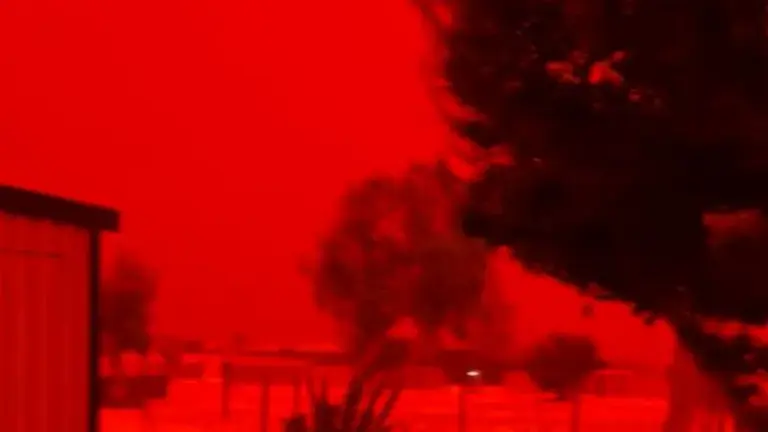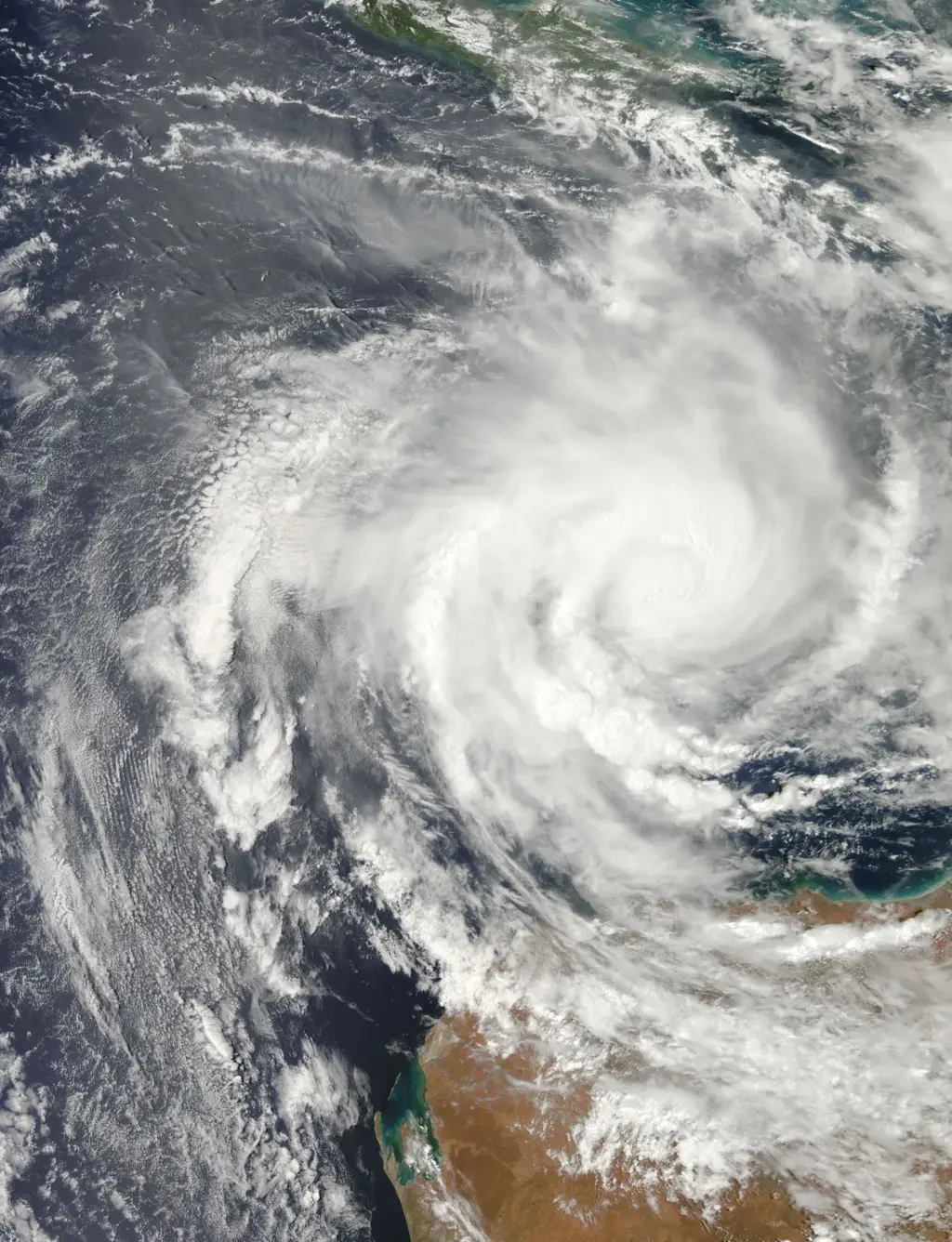
On March 29, 2026, the sky in Shark Bay, Western Australia, turned blood red just before Tropical Cyclone Narelle made landfall. This striking phenomenon was attributed to an iron-infused dust storm that lifted iron-rich red soil and dust into the atmosphere, filtering sunlight and creating a crimson sky.
Approximately 900 kilometers north of Perth, Narelle crossed into Western Australia, marking a significant event as it made landfall four times across the country. This storm is notable for being the first system in over 20 years to impact three of Australia’s states and territories.
Jessica Lingard from the Bureau of Meteorology explained how the cyclone’s strong winds contributed to the eerie conditions. “Narelle just whipped, picking up the dust from the landscape and pushing it through places like Shark Bay ahead of the cyclone,” she stated.
As the storm approached, residents reported an incredibly eerie atmosphere, with one visitor at the Shark Bay Caravan Park describing the scene: “Incredibly eerie outside, and everything is covered in dust. Not a lot of wind yet.” Videos captured during this time depicted the red sky, which many viewers described as having an ‘apocalyptic’ feel.
The dust storm that preceded Narelle played a crucial role in the unusual sky color, showcasing the interplay between weather systems and environmental conditions. The phenomenon serves as a reminder of the power of nature and its ability to create striking visual effects.
As of now, the cyclone has made its way inland, and authorities are monitoring the situation closely. The impact of Narelle is still being assessed, with emergency services on alert for potential flooding and damage in affected areas.
This sequence of events is significant for those living in the impacted regions, as it highlights the risks associated with tropical cyclones and the environmental factors that can exacerbate their effects. The unusual red sky phenomenon has drawn attention to the storm, prompting discussions about climate and weather patterns in Australia.
Details remain unconfirmed regarding the full extent of damage caused by Narelle, but the storm’s historical significance and the striking visuals it produced are already making headlines.