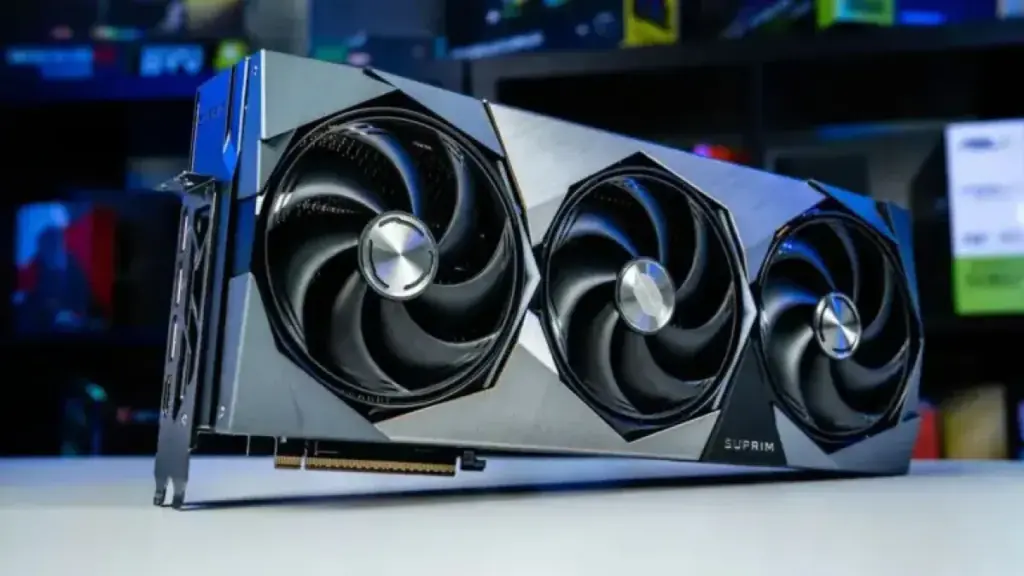
Nvidia introduced an architecture called Rubin at CES 2026, setting the stage for the highly anticipated RTX 6090. This new graphics card is designed to push the boundaries of gaming and rendering performance.
As of April 2, 2026, the RTX 6090 is reported to feature 192 streaming multiprocessors and 32GB of GDDR7 memory. This combination is expected to significantly enhance the card’s capabilities, particularly in path-tracing performance, which is projected to be up to 2 times better than the previous generation.
The RTX 6090 utilizes TSMC’s 3 nm manufacturing process, allowing for improved efficiency and performance. Additionally, it boasts a 512-bit memory interface, which is crucial for handling the high bandwidth required by modern gaming applications.
In terms of architecture, the RTX 6090 includes 6th-generation Tensor cores and 5th-generation RT cores, which are essential for advanced rendering techniques and artificial intelligence applications. These enhancements contribute to an estimated 30-35% improvement in raster performance.
There are also plans for different variants of the RTX 6090. A mid-high variant is expected to feature a 320-bit bus and approximately 20GB of GDDR7, while a lower-high variant may have a 256-bit bus and 16GB of GDDR7.
Documentation for the RTX 6090 indicates that it will support DLSS 5 and a neural-rendering feature set, further enhancing its appeal to gamers and professionals alike.
However, the release timing for the RTX 6090 remains uncertain, primarily due to potential memory supply constraints. Specific clock speeds and final silicon yields also remain unverified, leaving some details about the card unconfirmed.
As the gaming and tech communities await further announcements from Nvidia, the anticipation surrounding the RTX 6090 continues to grow, highlighting its potential impact on the market.