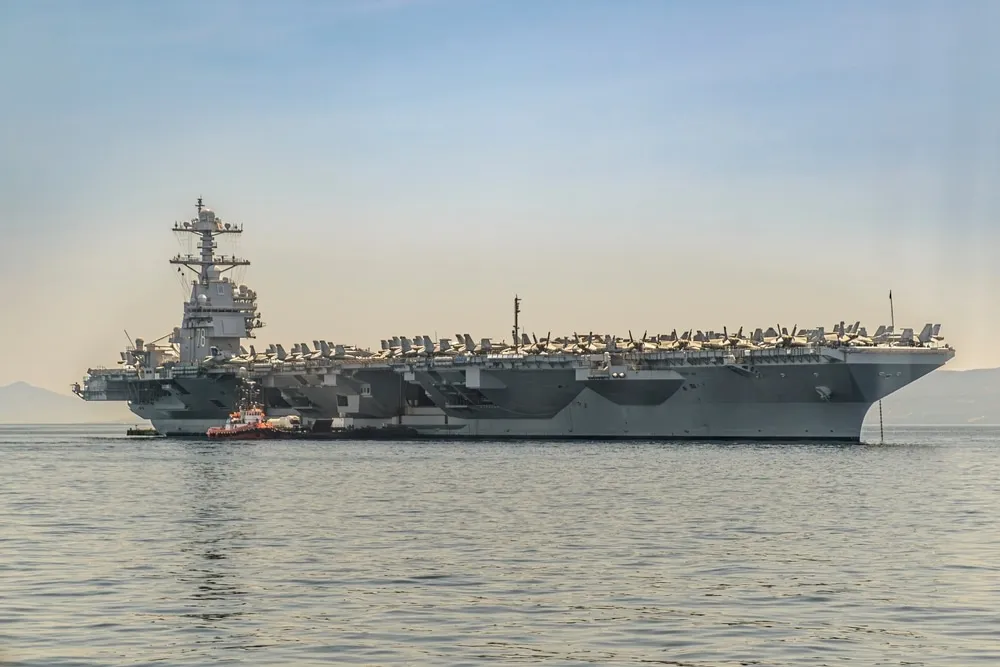
The recent incident involving the USS Gerald Ford raises significant questions about the safety and operational readiness of this American aircraft carrier. The fire, which occurred in the main laundry of the ship, resulted in injuries to two sailors. Fortunately, the fire did not impact the carrier’s operations, and all crew members had a place to sleep despite the damage.
The USS Gerald Ford, commissioned in 2017, is the largest aircraft carrier in the world, capable of carrying up to 100,000 tons at full load and housing over 4,000 sailors. It is powered by two nuclear reactors and has an operational speed of approximately 55 km/h. The carrier has been deployed in the Red Sea for nearly nine months, participating in various military operations, including recent actions against Iran.
Mark Warner, a U.S. official, noted that the crew has been under significant strain after nearly a year at sea. Reports indicate that around a hundred beds were damaged due to the fire, highlighting the incident’s impact on living conditions aboard the ship.
Prior to its deployment in the Middle East, the USS Gerald Ford was involved in operations against drug trafficking in the Caribbean. This extensive deployment underscores the strategic importance of the carrier in U.S. military operations.
Following the incident, the USS Gerald Ford is expected to head to Crete for repairs. The ship’s ability to maintain operational readiness is crucial, especially given its role in ongoing military engagements.
Details remain unconfirmed regarding the full extent of the damage and the specific timeline for repairs. However, the incident has raised concerns about the challenges faced by naval vessels operating in high-pressure environments.
As the situation develops, further updates on the USS Gerald Ford’s status and its future operations are anticipated. The incident serves as a reminder of the complexities and risks involved in maintaining a forward-deployed naval presence.