Key moments
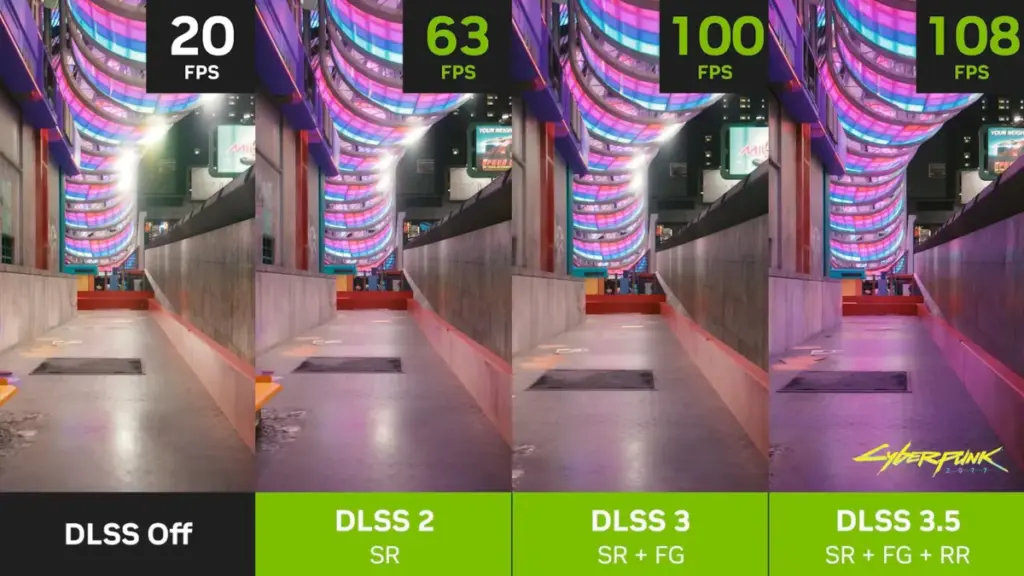
Nvidia has officially introduced its latest technology, DLSS 5, during the GTC 2026 keynote presentation led by CEO Jen-Hsun Huang. This new iteration of Deep Learning Super Sampling is designed to elevate the visual fidelity of PC games to unprecedented levels, promising a new era of photorealism.
DLSS 5 is expected to significantly enhance environmental lighting in games, allowing for more realistic interactions between light and surfaces. However, the technology is computationally intensive, requiring a second RTX 5090 GPU to effectively demonstrate its capabilities. This has raised questions about accessibility for average gamers, as the hardware demands may limit its widespread adoption.
Nvidia asserts that developers will have greater control over the AI enhancements integrated into their games, potentially leading to a more tailored gaming experience. This flexibility could allow for a range of artistic expressions, but it also places the onus on developers to implement the technology effectively.
Despite the ambitious goals of DLSS 5, initial reactions from the gaming community have been mixed, with a notable focus on its impact on character models. Critics have expressed concerns that the technology may lead to a homogenization of video game art, detracting from the unique visual styles that many developers strive to achieve. Fraser Brown, a prominent voice in the gaming community, remarked, “It’s the homogenisation of videogame art, and that sucks.”
Further criticism has emerged regarding Nvidia’s marketing approach for DLSS 5, which some believe has showcased poor examples of the technology’s potential. As the gaming landscape evolves, the expectations for visual fidelity continue to rise, and Nvidia’s promotional materials have not met the mark for some observers.
Jeremy Laird, a technology analyst, posed a thought-provoking question during the discussions surrounding DLSS 5: “What if you could essentially insert that kind of realistic lighting into a game without the need to brute-force all those light-bouncing calculations and instead do it with AI?” This highlights the potential benefits of the technology, even as concerns linger.
As the gaming community continues to digest the implications of DLSS 5, reactions remain varied. Dave James expressed disappointment, stating, “I find it disappointing, but again not surprising, there’s no nuance to the discussion.” Meanwhile, Lincoln Carpenter described a specific interaction in a game where the technology was toggled on and off, illustrating the stark contrast in visual quality and the unsettling effect it can produce.
DLSS 5 is set to be available in Fall 2026, and as the release date approaches, the anticipation and scrutiny surrounding this technology will likely intensify. While Nvidia aims to position DLSS 5 as a revolutionary shift in game rendering, the initial feedback suggests that the journey ahead may be fraught with challenges and debates about the future of visual storytelling in gaming.