The wider picture
The Artemis program aims to return humans to the moon and establish a long-term presence there as a stepping stone toward future missions to Mars. This ambitious initiative marks a significant milestone in space exploration, as it seeks to build on the legacy of the Apollo missions that last sent astronauts to the lunar surface over 50 years ago.
In a major development, NASA has announced that the Artemis 2 mission is scheduled to lift off on April 1, 2026, at 6:24 p.m. EDT (2224 GMT) from Kennedy Space Center in Florida. This mission will be the first crewed flight around the moon since the Apollo program, highlighting a new era of human space exploration.
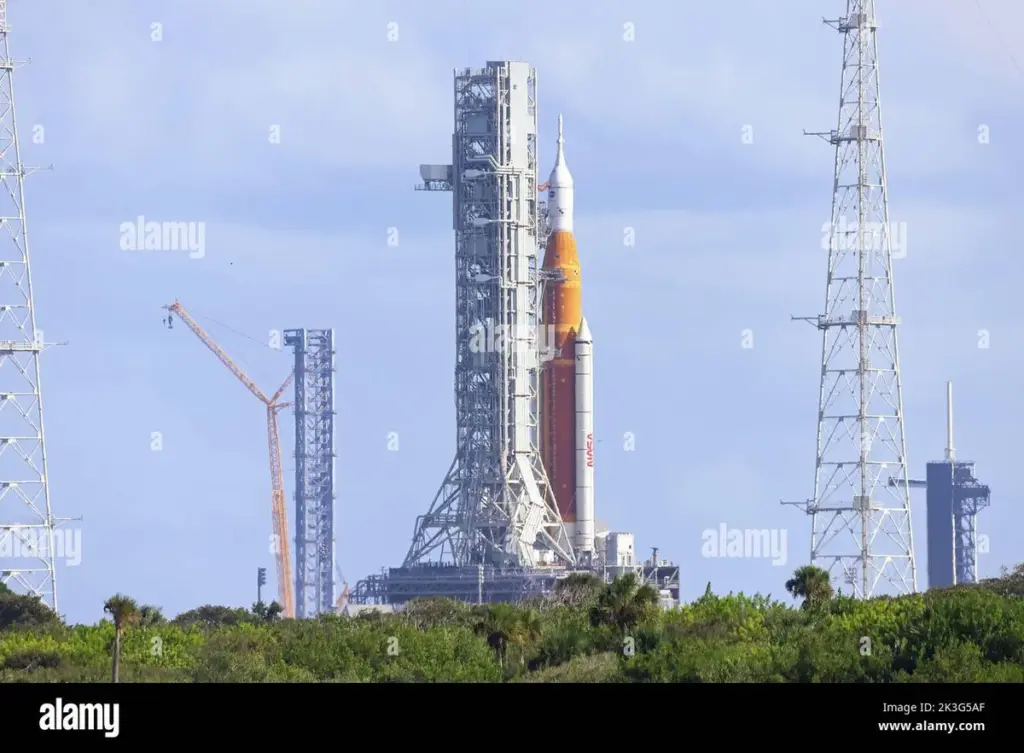
The Artemis 2 mission will send four astronauts on a roughly 10-day journey around the moon aboard NASA’s Space Launch System (SLS) rocket. The crew includes Reid Wiseman, Victor Glover, Christina Koch, and Jeremy Hansen. Notably, Koch will become the first woman to travel to the moon’s vicinity, Glover will be the first person of color to do so, and Hansen will be the first non-American astronaut to reach this milestone.
The SLS rocket, classified as a super-heavy lift launch vehicle, stands at an impressive 322 feet tall and generates 8.8 million pounds of thrust, making it NASA’s most powerful rocket to date. This launch will serve as a critical test of the systems that will ultimately support a sustained human presence on the moon and pave the way for future exploration of Mars.
NASA officials have emphasized the importance of the Artemis 2 mission, stating, “Launching the Artemis II Moon rocket will lift off the agency’s first crewed mission under the Artemis program, testing the systems that will return astronauts to the Moon for an enduring presence, and paving the way to human exploration of Mars.” This mission represents a significant step toward achieving long-term goals in space exploration.
The Artemis program is designed not only to return humans to the moon but also to establish a sustainable presence there. Following Artemis 2, the first crewed lunar landing is planned for 2028 during the Artemis 4 mission, further expanding humanity’s reach in space.
As the launch date approaches, excitement is building within the space community and among the public. Observers are keenly watching the preparations for this historic mission, which promises to inspire a new generation of explorers and scientists. With the Artemis 2 mission, NASA aims to demonstrate its commitment to advancing human spaceflight and exploration.
Details remain unconfirmed regarding the final preparations for the launch, but the agency is optimistic about the upcoming mission and its implications for future lunar and Martian exploration.