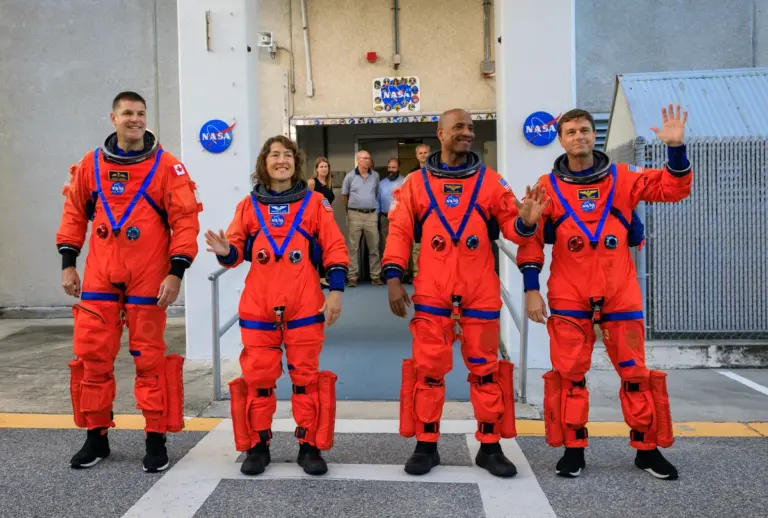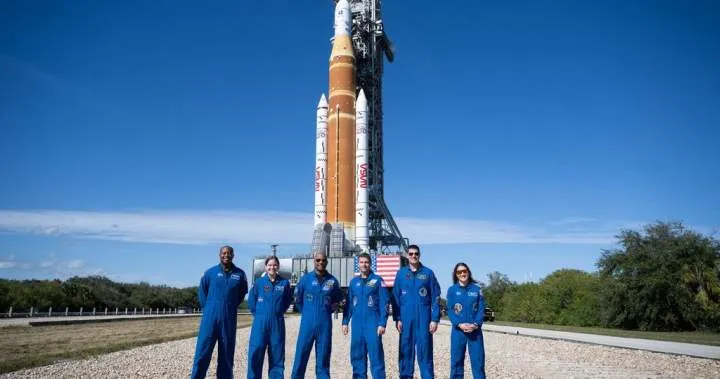
NASA has announced that the Artemis II mission is scheduled for launch on April 1, 2026, at 6:24 p.m. EDT from the Kennedy Space Center in Florida. This mission will be significant as it marks the first crewed journey into lunar orbit since the Apollo missions, which took place over 50 years ago.
The Artemis II mission will not land on the moon but will conduct a lunar flyby, taking the crew approximately 4,700 miles away from the lunar surface. The mission is expected to last around 10 days and will include four astronauts: Jeremy Hansen, Reid Wiseman, Victor Glover, and Christina Koch. Hansen will make history as the first Canadian astronaut to participate in a lunar mission.
This mission is part of NASA’s broader Artemis program, which aims to establish a sustainable human presence on the moon and pave the way for future human exploration of Mars. The Artemis missions are designed to explore the moon’s capabilities to support a permanent base on its surface, which is crucial for long-term space exploration.
Elkin Norena, a NASA official, emphasized the historical significance of the mission, stating, “This is a historic mission in the sense that not only are there going to be people on board going toward the moon, but they’re going to go up the farthest they’ve ever gone in over 50 years.” This reflects the ambitious goals of the Artemis program to push the boundaries of human spaceflight.
In addition to the Artemis II mission, NASA has plans for Artemis III, which is expected to test new extravehicular activity (EVA) suits for the lunar surface. Furthermore, Artemis IV and V are planned for 2028, which will focus on landing astronauts on the moon.
Jeff Spaulding, another NASA representative, noted the excitement surrounding the mission, saying, “People are excited, and ready to go on this first chapter on our way back to the moon since the 1970s.” This enthusiasm is echoed by many in the space community, who see the Artemis program as a pivotal step in advancing human exploration beyond Earth.
As the launch date approaches, reactions from various stakeholders, including the Canadian Space Agency, highlight the collaborative nature of this mission. Kutryk, a representative from the agency, remarked, “If you’re a young Canadian, you should be growing up into a world where nothing is impossible,” underscoring the inspirational aspect of the Artemis II mission.
Overall, the Artemis II mission represents a significant milestone in space exploration, aiming to create a durable lunar presence and inspire future generations of explorers. Details remain unconfirmed as preparations continue for this historic journey.