How it unfolded
As NASA prepares for its Artemis II mission, the agency is set to make history by launching its first crewed mission under the Artemis program. This significant event is scheduled for April 1, 2026, with a targeted launch time of 6:24 p.m. EDT from the Kennedy Space Center in Florida. The Artemis II mission aims to send a crew of four astronauts on a 10-day journey around the Moon, marking a pivotal moment in lunar exploration.
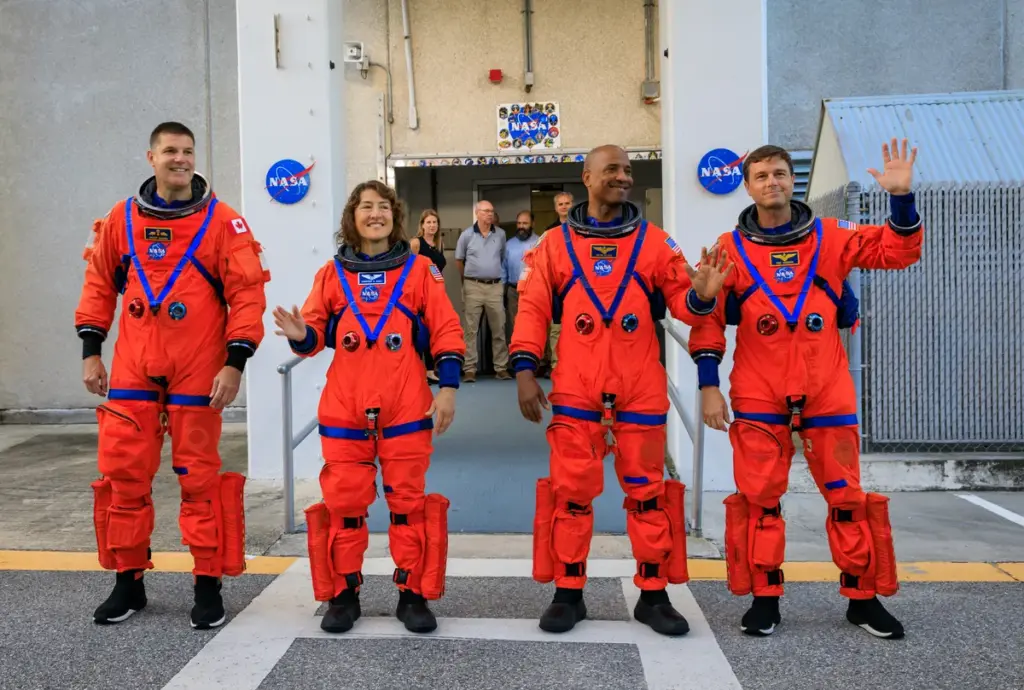
The crew for this mission includes Canadian Space Agency astronaut Jeremy Hansen and NASA astronauts Christina Koch, Victor Glover, and Reid Wiseman. This diverse team will be the first humans to test the Orion spacecraft’s life support systems in space, a crucial step in ensuring the safety and success of future missions to the Moon and beyond.
During the mission, the crew is expected to surpass the record for the farthest distance from Earth achieved by humans, previously set by Apollo 13 at 248,655 miles from Earth. This ambitious goal underscores NASA’s commitment to returning humans to the Moon and eventually paving the way for future exploration of Mars.
The Artemis II mission will utilize NASA’s Space Launch System (SLS) rocket, which is designed to carry astronauts and cargo into deep space. The SLS is a critical component of NASA’s Artemis program, enabling the agency to conduct crewed missions beyond low Earth orbit.
NASA plans to provide extensive coverage of the Artemis II mission, including live broadcasts of prelaunch, launch, and mission events on its YouTube channel. The agency will also hold a post-launch news conference approximately two-and-a-half hours after the launch, allowing the public and media to engage with the mission’s progress.
Throughout the mission, the crew will participate in live conversations, known as downlinks, providing updates on their experiences and the mission’s status. NASA will continuously update its Artemis blog with information during the launch countdown and throughout the mission, ensuring that the public remains informed about this historic journey.
The crew’s return to Earth is expected to occur on April 10, 2026, with a splashdown in the Pacific Ocean. This mission not only represents a return to lunar exploration for NASA but also serves as a testament to the agency’s ongoing efforts to inspire future generations in the fields of science, technology, engineering, and mathematics.
As the countdown to the Artemis II launch continues, excitement builds around the potential discoveries and advancements that this mission may bring. NASA’s commitment to lunar exploration is once again at the forefront, as the agency aims to establish a sustainable human presence on the Moon and prepare for future missions to Mars.