Reaction from the field
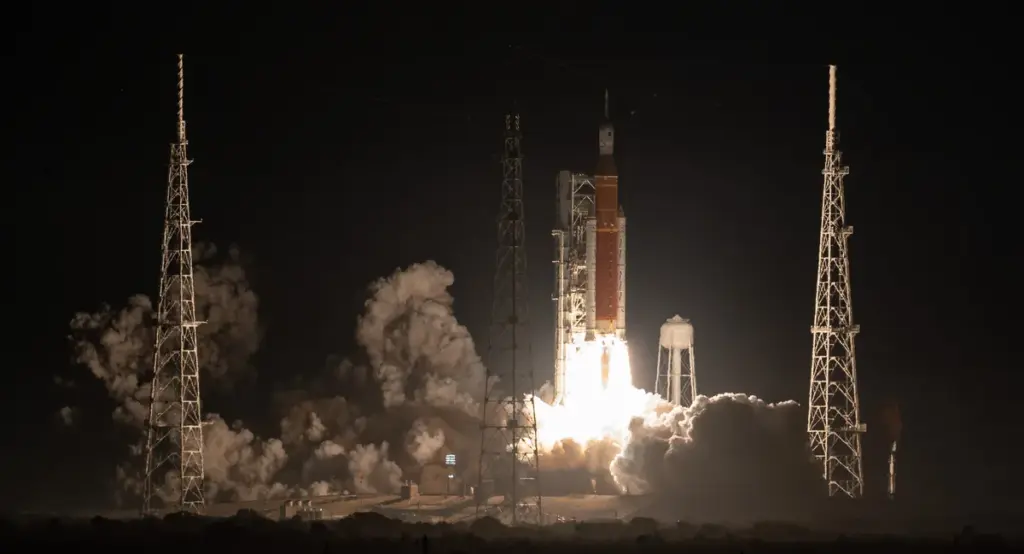
NASA’s Artemis II mission, scheduled to launch on April 1, 2026, represents a pivotal moment in human space exploration, as it will mark the first time astronauts orbit the Moon since the Apollo program. This mission aims to send four astronauts on a 10-day journey around the Moon, utilizing the Space Launch System (SLS) heavy lift rocket to propel the Orion spacecraft into orbit. The significance of this mission lies not only in its historical context but also in its ambitious goals for future lunar exploration.
The Artemis II mission will see the Orion spacecraft travel more than 400,000 kilometers from Earth, making a trip around the Moon’s far side, an area that has never been seen by human eyes. This journey is designed to gather critical data and experience in preparation for future lunar landings and the establishment of a sustained human presence on the Moon.
NASA has outlined a vision for lunar exploration that includes at least one Moon landing per year starting in 2028, with plans for a Moon base under construction by 2030. This long-term strategy aims to facilitate further exploration beyond low Earth orbit and pave the way for future missions to Mars and beyond.
As the launch date approaches, NASA officials are optimistic about the mission’s success. Scott Pace, a key figure in the Artemis program, stated, “We’re about to send humans in orbit around the Moon again.” This sentiment reflects the excitement and anticipation surrounding the mission, which is seen as a stepping stone to more extensive human exploration of space.
The Artemis II mission will also test the capabilities of the Orion spacecraft, particularly its heat shield, which has undergone extensive testing and development. Scott Pace noted, “The heat shield has had a long and complicated history,” highlighting the complexities involved in preparing for such a high-stakes mission. Upon re-entry, the Orion capsule will experience speeds of 32,187 km/h and temperatures reaching up to 2,200°C, making the mission a critical test of the spacecraft’s engineering and design.
In addition to NASA’s efforts, the Canadian Space Agency is collaborating on the Artemis program, with astronaut Jeremy Hansen set to be part of the crew for Artemis II. This partnership underscores the international interest and investment in lunar exploration, as countries around the world recognize the importance of returning humans to the Moon.
As excitement builds for the Artemis II launch, details remain unconfirmed regarding the final crew selection and specific mission parameters. However, the commitment to advancing human space exploration remains clear, with the Artemis program poised to redefine humanity’s relationship with the Moon and beyond.
With the Artemis II mission, NASA is not just aiming for a return to the Moon; it is laying the groundwork for a new era of exploration. Jared Isaacman, a prominent figure in the space community, encapsulated this vision by stating, “This time the goal is not flags and footprints. This time the goal is to stay.” This perspective reflects a shift in focus from short-term missions to long-term sustainability in space exploration.