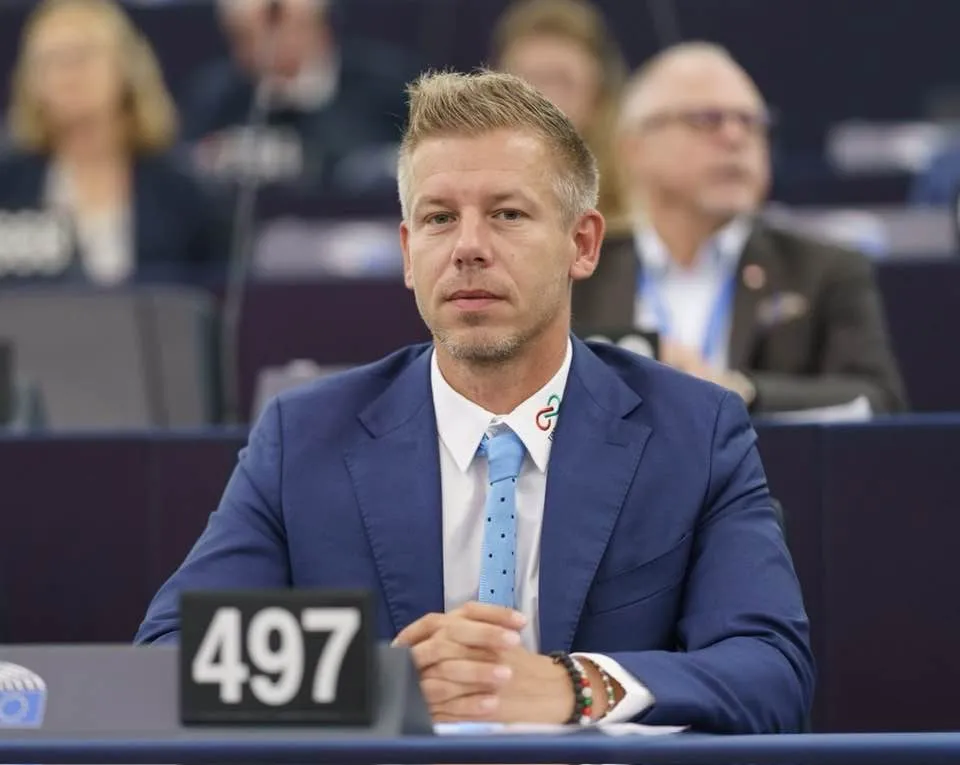
“Magyar accused Orbán’s government of systemic corruption and operating in the interests of a small circle of political and economic elites,” stated Péter Magyar, the newly elected leader of the opposition Tisza party. This declaration came after a historic election on April 10, 2026, where Magyar succeeded in unseating Viktor Orbán, who had held power for 16 years.
Magyar’s political journey has been remarkable. Born in 1981, he joined Fidesz in 2002, where he spent over two decades building his career within the political framework established by Orbán. However, his political rise began in earnest in early 2024, following a series of events that would ultimately lead to his break with Fidesz. Notably, the pardon scandal in 2024 played a crucial role in this split, as it highlighted significant political disagreements between Magyar and the ruling party.
In the European Parliament elections of June 2024, Tisza party, under Magyar’s leadership, garnered 30% of the vote, a significant achievement that energized a broad segment of Hungarian society. This momentum was further evidenced by the turnout at his rallies, with 50,000 people gathering on March 15, 2024, and an impressive 100,000 attending the National March on April 6, 2024. These events showcased the growing support for Magyar and his party.
Magyar’s combative style and conservative views have drawn both support and criticism. He has openly challenged the status quo, positioning himself as a champion against what he describes as systemic corruption within Orbán’s government. His first interview after breaking with Fidesz was featured on the popular YouTube channel Partizán, where he reiterated his commitment to reform and accountability.
“It was a ‘painful’ election result,” Orbán remarked, acknowledging the shift in political power. The implications of Magyar’s victory extend beyond mere electoral numbers; they signal a potential transformation in Hungarian politics, as many citizens express a desire for change after years of Fidesz dominance.
Magyar’s personal life has also been a topic of interest, particularly following his divorce from Judit Varga in 2023. He is a father of three, and his family life has been intertwined with his political career, influencing his public persona and appeal to voters. As he navigates this new political landscape, the balance between his personal and professional commitments will be closely watched.
As Péter Magyar steps into this new role, he emphasizes the need for an “insurance policy in case I come into conflict with Orbán’s regime.” This statement reflects the challenges he may face ahead, as he seeks to implement his vision for Hungary while contending with the legacy of his predecessor. The future of Hungarian politics remains uncertain, but the recent developments indicate a significant shift in the political landscape.