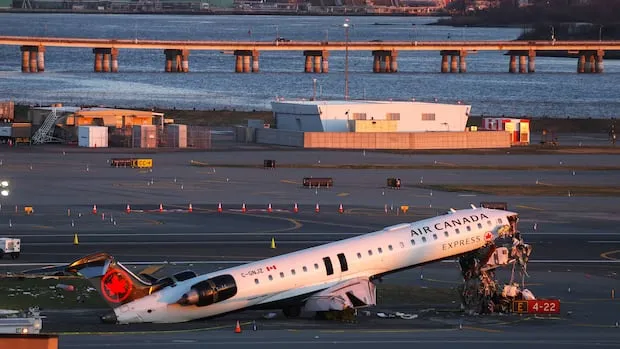
On a recent evening at LaGuardia Airport in New York, an Air Canada Express jet collided with a fire truck on the runway, leading to a tragic outcome. The incident resulted in the deaths of two pilots and left dozens of others injured. The aircraft involved was a CRJ-900 operated by Jazz Aviation, which had just taken off from Montreal Trudeau International Airport with approximately 70 passengers on board.
At the time of the collision, two air traffic controllers were present in the tower cab. One controller, who signed in for work at 10:30 p.m. ET, was in charge of overall safety operations, while the local controller, who signed in at 10:45 p.m. ET, managed active runways and immediate airspace. The National Transportation Safety Board (NTSB) is currently investigating the staffing levels of air traffic control at LaGuardia during the incident.
Jennifer Homendy, chair of the NTSB, has stated that having two controllers on the midnight shift is standard operating procedure for LaGuardia. She emphasized the complexity of the environment, noting, “This is a heavy workload environment.” Despite the challenges, Homendy also pointed out that there is no indication that fatigue played a role in the collision.
As the investigation unfolds, Homendy cautioned against hastily attributing blame to the controllers, stating, “I would caution against pointing fingers at controllers and saying distraction was involved.” She highlighted that multiple factors contributed to the incident, asserting, “Many, many things went wrong.” This perspective underscores the NTSB’s approach to understanding the various elements that can lead to such accidents.
Currently, the runway where the collision occurred remains closed, although flights at LaGuardia Airport resumed the day following the incident. The NTSB is continuing its investigation, focusing on the circumstances surrounding the collision and the actions of the air traffic controllers involved.
Details remain unconfirmed regarding who was conducting the duties of the ground controller at the time of the collision, and further clarification is needed about other personnel present during the incident. The NTSB has raised concerns about fatigue during midnight shifts in the past, which adds another layer of complexity to the investigation.
As the situation develops, the NTSB aims to provide a comprehensive understanding of the factors that led to this tragic event, ensuring that lessons are learned to prevent future occurrences.