Background of the Conflict
Ayatollah Ali Khamenei served as Iran’s supreme leader for 37 years until his death on February 28, 2026, following a U.S.–Israeli strike in Tehran. His passing marked a pivotal moment in Iranian politics, leading to the appointment of Mojtaba Khamenei as the new supreme leader by the Assembly of Experts. This transition has significantly altered the dynamics of the ongoing Israel-Iran conflict, which has seen escalating tensions and military engagements.
Recent Developments
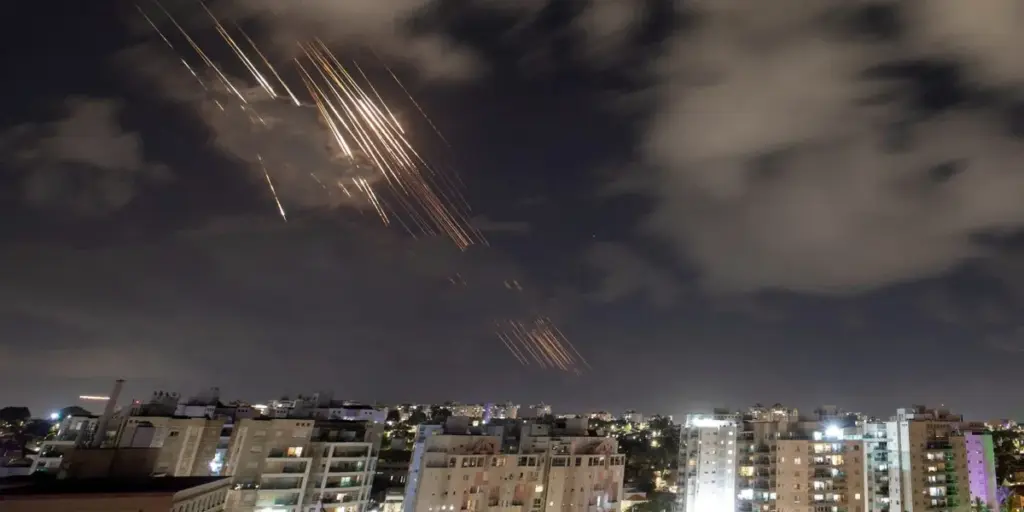
In a dramatic turn of events, Iran launched attacks on Israel and several Gulf states shortly after Mojtaba Khamenei’s appointment. These assaults have resulted in over 1,200 fatalities in Iran, nearly 400 in Lebanon, and 11 in Israel. The conflict’s escalation has raised alarms across the region, prompting responses from various nations and military entities.
International Reactions
The Pentagon has reported that seven U.S. service members have been killed since the onset of this renewed conflict. In response to the heightened risks, the U.S. Embassy in Riyadh has ordered the departure of nonemergency government employees. Meanwhile, Saudi Arabia has intercepted several drones targeting its Shaybah oil field, emphasizing the immediate threat posed by Iranian military actions.
Impact on Global Markets
The conflict has also had significant repercussions on global oil markets. Crude oil prices briefly neared $120 a barrel amid the escalating tensions, prompting Bahrain’s state oil company to declare ‘force majeure’ on its operations. The average gasoline price in the U.S. surged by about 50 cents a gallon in just one week, reaching $3.45, reflecting the broader economic impact of the ongoing violence.
Statements from Key Players
Saudi Arabia’s Foreign Ministry has affirmed the kingdom’s right to take necessary measures to safeguard its security and deter aggression, highlighting the seriousness of the situation. In the financial sector, Rebecca Babin remarked, “We have gone from traders with ice in their veins to traders with panic in their veins,” illustrating the anxiety gripping markets amidst the conflict.
Military Engagements
On the military front, the Israeli military has targeted and destroyed the headquarters of the air force of the Islamic Revolutionary Guard Corps (IRGC), a significant blow to Iran’s military capabilities. Additionally, Turkey’s Ministry of National Defense reported that a ballistic munition launched from Iran was neutralized by NATO defenses, indicating the wider implications of the conflict beyond the immediate region.
Looking Ahead
As the situation continues to unfold, the long-term implications of Mojtaba Khamenei’s leadership remain uncertain. Observers are closely monitoring the developments, particularly regarding potential further military actions and the broader geopolitical landscape in the Middle East. Details remain unconfirmed regarding the exact number of casualties in various attacks, adding to the complexity of the ongoing crisis.