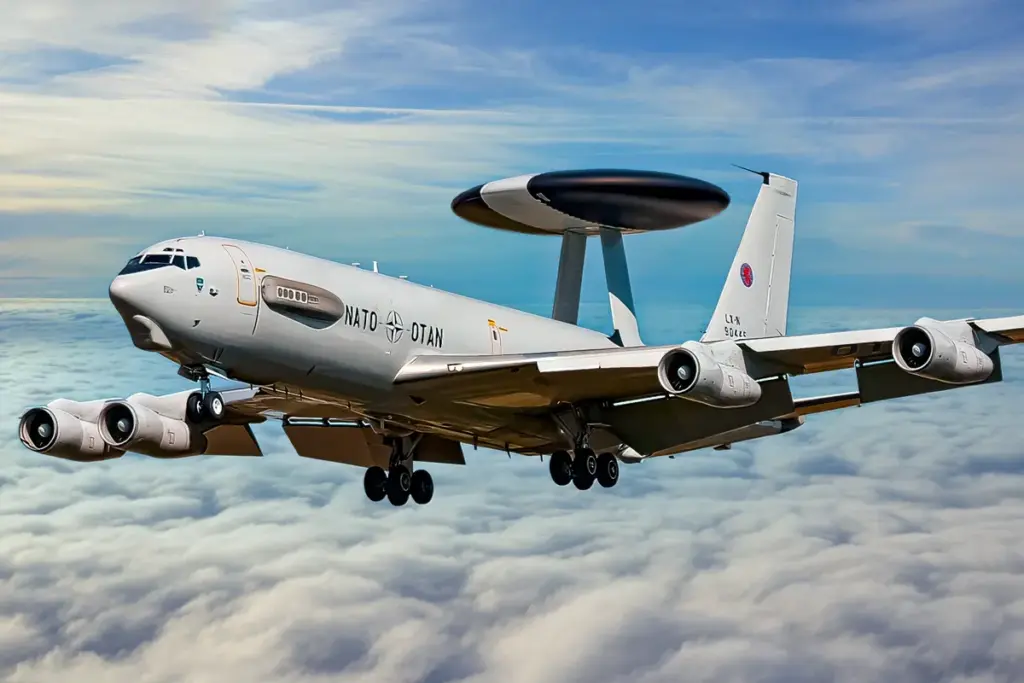
In a significant development, an Iranian strike has destroyed an E-3 Sentry AWACS aircraft at Prince Sultan Air Base in Saudi Arabia on March 30, 2026. This incident marks a critical blow to U.S. military surveillance capabilities in the region.
The E-3 Sentry, an airborne warning and control system (AWACS), was one of 16 such aircraft in the U.S. fleet prior to the attack. The aircraft is capable of tracking approximately 600 targets simultaneously and can monitor an extensive battlespace of up to 120,000 square miles.
The loss of the E-3 Sentry is particularly concerning as it represents a decline in the U.S. fleet, which has decreased from 32 aircraft in 2015 to just 17 at the beginning of 2026. The current cost of an E-3 Sentry is around $540 million, reflecting the significant investment in these surveillance systems.
Experts have expressed alarm over the implications of this strike. Andreas Krieg noted, “Iran is gradually eating away at the network of early warning systems that the US has built over decades in the region.” Meanwhile, Cedric Leighton stated, “The loss of the AWACS is a serious blow to (US) surveillance capabilities.”
Additionally, Daniel Davis commented, “We’re not doing OK at all,” highlighting the severity of the situation for U.S. forces. Kelly Grieco further elaborated, stating, “Iran’s going after the radars that detect threats, the tankers that keep jets flying, and the AWACS that direct the battle.”
The U.S. Air Force has been exploring replacements for the aging E-3 fleet, but the Pentagon has yet to finalize a new platform. This incident may accelerate discussions regarding the future of U.S. airborne surveillance.
Details remain unconfirmed regarding the presence of Oklahoma-based crews during the attack, as well as the extent of damage to U.S. forces and assets in the region.