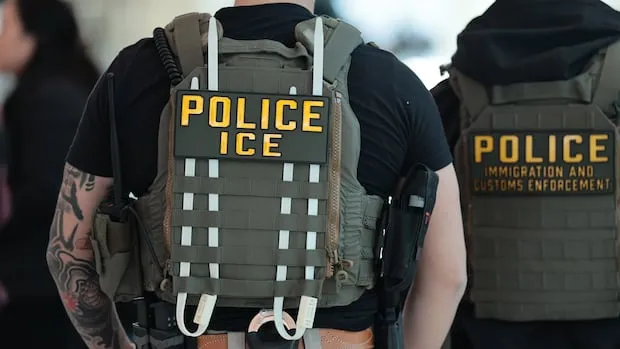
What does the presence of U.S. Immigration and Customs Enforcement (ICE) in Canada mean for local communities during the World Cup? The answer is complex and fraught with concern. While ICE has no authority on Canadian soil, its presence at events could instill fear among immigrant populations, particularly in cities like Toronto and Vancouver where matches are scheduled.
ICE operates five offices in Canada, including major cities such as Toronto and Vancouver. However, Canadian officials have clarified that ICE has no jurisdiction on their territory. An ICE spokesperson stated, “HSI special agents do not conduct operational activities in Canada, such as making arrests or executing search warrants.” Despite this, the agency’s involvement in the World Cup has raised alarms.
Canada is co-hosting the World Cup with the United States and Mexico, with 39 days of matches planned, including 13 in Toronto and Vancouver. The Toronto city council has already passed a motion opposing ICE’s presence at these events, reflecting the community’s apprehension. Research indicates that ICE’s presence could send a chilling message to immigrant communities, deterring them from attending public events.
Concerns about ICE are not unfounded. The agency has been involved in controversial immigration enforcement operations in the U.S., with at least three dozen people reported to have died in ICE custody since January 2025. Additionally, studies show that 30% of Latino youth avoid daily activities due to fear of enforcement, highlighting the pervasive anxiety within these communities.
Organizations like Amnesty International have voiced their concerns, noting that the deployment of ICE personnel for security at the World Cup could exacerbate fears among immigrants. An Amnesty report mentioned that “the U.S. team is drawn to play in Canada in later rounds and ICE personnel are deployed to provide security.” This situation has the potential to create a hostile environment for many attendees.
Moreover, recent changes in housing regulations have targeted mixed-status families, threatening eviction unless undocumented members are separated from their families. This has further compounded the fears within immigrant communities, as enforcement near schools has been shown to traumatize children and disrupt community cohesion.
As the World Cup approaches, the implications of ICE’s presence remain a pressing concern for many. While Canadian officials maintain that ICE has no authority in Canada, the psychological impact of their presence cannot be overlooked. The fear expressed by community members is a rational response to an increasingly hostile environment. As one author noted, “My fear is a rational response to an irrational climate, but it does not have to be our reality for much longer.”
Details remain unconfirmed regarding the extent of ICE’s involvement in the World Cup, but the situation continues to evolve as communities prepare for the tournament. The balance between security and the rights of individuals remains a critical issue as the event draws near.