Reaction from the field
On April 2, 2026, Pope Leo XIV delivered a poignant homily during the Mass of the Lord’s Supper at the Basilica of St. John Lateran, marking Holy Thursday. This day is significant in the Catholic tradition as it commemorates the institution of the Eucharist and the priesthood, pivotal elements of the faith. The pope’s message resonated deeply with the congregation, emphasizing the importance of self-giving love in the lives of Catholics.
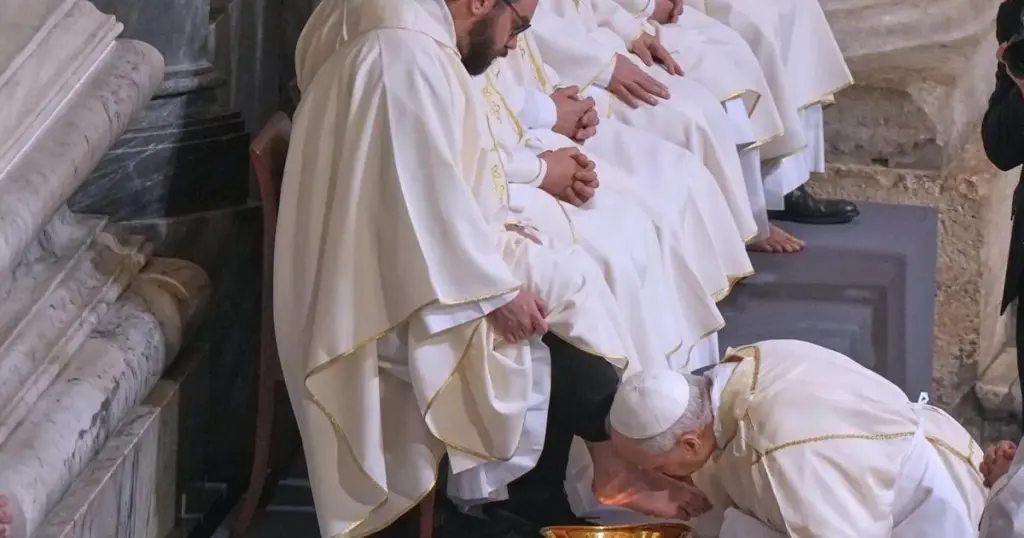
Pope Leo XIV revived the traditional foot-washing ritual during the Mass, washing the feet of 12 priests, a symbolic act reflecting Jesus’ own actions during the Last Supper. This ritual serves as a reminder of humility and service, core tenets of the Christian faith. The pope’s choice to perform this act underscores a commitment to tradition while also reinforcing the message of love and service that Jesus exemplified.
In his homily, Pope Leo XIV stated, “Jesus purifies not only our image of God — from the idolatry and blasphemy that have distorted it — but also our image of humanity.” This statement encapsulates the essence of the Holy Thursday observance, urging the faithful to reflect on their relationship with God and with one another. The pope called on Catholics to embrace a mission rooted in self-giving love, highlighting the intrinsic bond between the sacraments of the Eucharist and holy orders.
The pope further emphasized the challenges faced by the faithful, noting, “In this dark hour of history, it has pleased God to send us to spread the fragrance of Christ where the stench of death reigns.” This call to action is particularly relevant in today’s world, where many face despair and uncertainty. By invoking the need for self-giving love, Pope Leo XIV aims to inspire a renewed commitment to faith and service among Catholics.
Additionally, the pope remarked on the nature of mission, stating, “The cross is part of the mission: the sending becomes more bitter and frightening, but also more freeing and transformative.” This acknowledgment of the difficulties inherent in living a life of faith serves to prepare the congregation for the challenges they may encounter as they seek to embody the teachings of Christ.
Pope Francis, who previously celebrated the Mass in various locations, has included people of different faiths in the foot-washing ritual, reflecting a broader inclusivity. This approach contrasts with the traditional practice but highlights the evolving nature of the Church’s outreach and its commitment to fostering interfaith dialogue.
As the Catholic Church continues to navigate the complexities of modern society, the messages delivered on Holy Thursday by Pope Leo XIV serve as a reminder of the enduring significance of the Eucharist and the priesthood. The emphasis on self-giving love and the call to embrace the mission of spreading Christ’s message remain central to the Church’s mission.
Details remain unconfirmed regarding how these themes will be integrated into future Church activities or teachings. However, the impact of this Holy Thursday observance is expected to resonate throughout the Church as it seeks to address contemporary challenges while remaining rooted in its foundational beliefs.