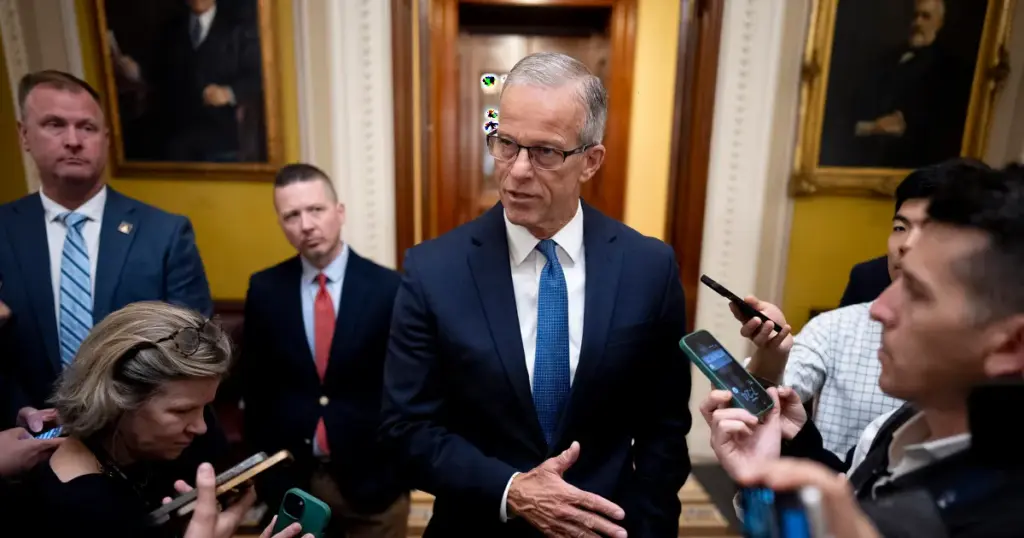
The filibuster is currently a point of conflict within the Republican Party, as many GOP senators are resisting former President Donald Trump’s demand to eliminate this longstanding Senate procedure. Trump’s push comes as he seeks to expedite legislation, particularly concerning funding for Immigration and Customs Enforcement and Border Patrol through a party-line bill.
The reconciliation bill, which is central to Trump’s agenda, requires only a simple majority to pass. This contrasts with the filibuster, which traditionally requires a cloture vote to end debate, thus allowing a minority party to extend discussions indefinitely. Last year, the GOP successfully utilized a filibuster-proof process to pass the One Big Beautiful Bill Act, showcasing the potential advantages of such legislative maneuvers.
Senate Majority Leader John Thune is under mounting pressure regarding the filibuster and the SAVE America Act, which is closely tied to Trump’s political priorities. Trump has urged Thune to eliminate the filibuster to facilitate the passage of his favored legislation. “Whatever it takes, we gotta do this for the American people,” stated Rep. Barry Moore, echoing the sentiments of many who support Trump’s agenda.
In a recent statement, Trump emphasized the urgency of the situation, asserting, “Reconciliation is ON TRACK, and we are moving FAST and FOCUSED in keeping our Border SECURE, and getting funding to the Department of Homeland Security and the Justice Department to continue our incredible SUCCESS at MAKING AMERICA SAFE AGAIN!” This highlights the administration’s focus on border security as a critical issue.
As the debate continues, some conservative commentators have questioned the priorities of GOP senators. One journalist remarked, “Why is the filibuster more important than stopping illegals from voting?” This sentiment underscores the tension within the party as it grapples with balancing traditional Senate procedures against the urgency of Trump’s legislative goals.
Details remain unconfirmed regarding how the GOP will navigate this internal conflict, particularly as the Senate prepares for upcoming votes. Observers are closely watching how these dynamics will unfold and what impact they may have on the Republican Party’s legislative effectiveness moving forward.