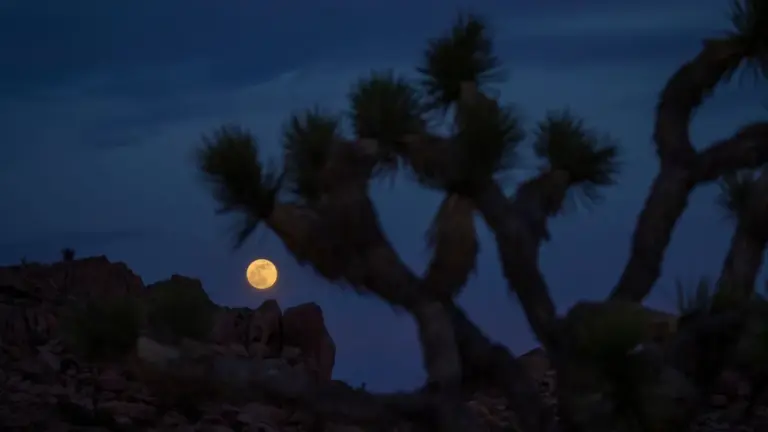
Look up! A total lunar eclipse, referred to as the “blood moon,” is anticipated to grace the skies of Quebec and across North America during the night from Monday to Tuesday.
The residents of Quebec will have the opportunity to witness a rare and stunning astronomical event. The “blood moon” will be observable throughout the province, provided the weather cooperates, according to NASA.
What is a Blood Moon
A total lunar eclipse occurs when the Earth perfectly aligns itself between the Sun and the Moon. At this moment, our planet casts its shadow onto the lunar surface.
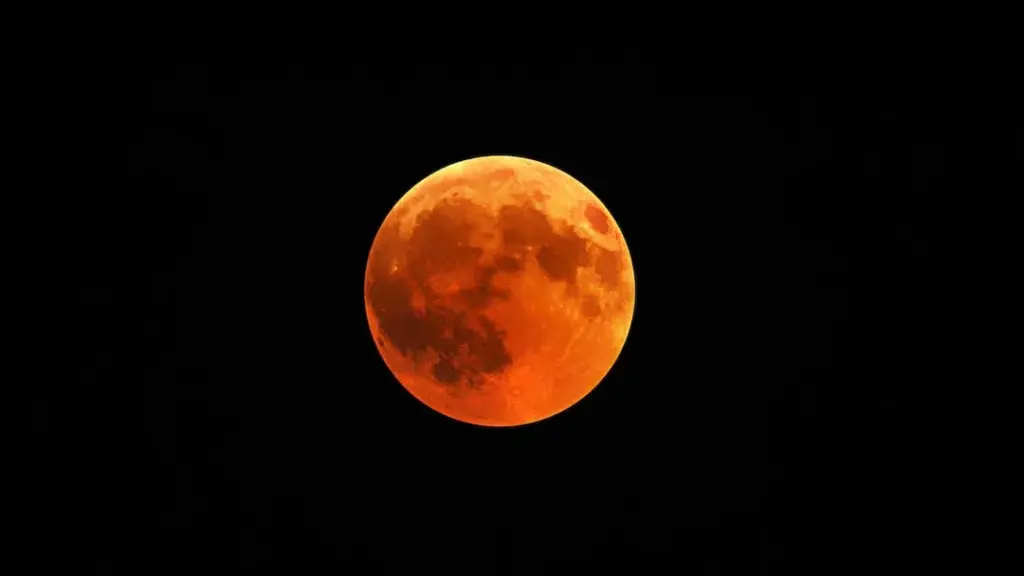
The moon will display a reddish-orange hue, a hallmark of this phenomenon, during the lunar eclipse of 2026.
WENN.com
Viewing Tips for Quebec
This glow is a result of sunlight, which is bent and filtered by Earth’s atmosphere. In fact, it represents the combined light of all the sunrises and sunsets around the globe, as reported by the Astrolab at Mont-Mégantic National Park.
What time will it be?
To witness the lunar eclipse in 2026, one must either stay up late or rise very early.
Lunar Eclipse Science Explained
The perfect alignment for a total lunar eclipse can only occur during a full moon. The so-called “penumbral” phase will begin at 3:44 AM in Quebec on March 3rd. The totality, which is when the Moon will be completely enveloped in Earth’s shadow, will start at 6:04 AM and last for about an hour. The eclipse will conclude around 9:23 AM.
According to forecasts, Quebec will be one of the most breathtaking places in the world to witness the lunar eclipse in 2026.
Image courtesy of WENN.COM
Significance of the Event
How to view the lunar eclipse in 2026?
Unlike a solar eclipse, no special equipment is required to witness the natural phenomenon on the Moon. It can be observed with the naked eye.
Just a clear view of the sky, free of clouds, is enough for those who enjoy astronomy.
According to NASA, solar and lunar eclipses occur between four to seven times each year. A partial lunar eclipse is set to take place in August and will be observable from various parts of the globe, including regions in America, Europe, and Africa.
The next total lunar eclipse is anticipated to occur around December 31, 2028.