Who is involved
Before the recent championship in Ogden, Utah, expectations were high for both Niklas Edin and Matt Dunstone. Edin, a seasoned player from Sweden, had previously struggled at the Olympic Games, holding a disappointing 2-7 record. In contrast, Dunstone’s team, representing Canada, was seen as a formidable contender, having performed strongly in the lead-up to the finals.
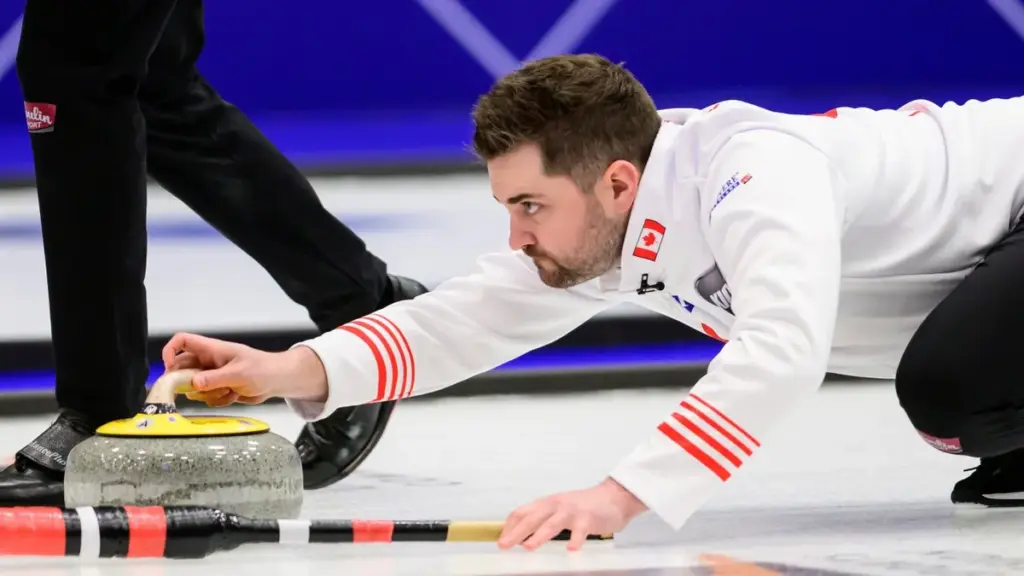
The decisive moment came on April 4, 2026, when Edin faced Dunstone in the gold medal match. Edin’s team emerged victorious with a score of 9-6, marking a significant achievement in his career as it was his eighth world title. The match showcased Edin’s exceptional skill, with an impressive accuracy rate of 95 percent, compared to Dunstone’s 78 percent. This performance underscored Edin’s dominance in the sport.
In the final game, Edin’s team scored two points four times, demonstrating their strategic prowess. Dunstone’s team, which included vice Colton Lott, second E.J. Harnden, and lead Ryan Harnden, managed to score a pair of deuces but ultimately fell short. Dunstone expressed disappointment, stating, “It’s unfortunate for sure. Wish (we) could have put a little bit more pressure on them throughout the game…” This sentiment reflects the high stakes and competitive nature of the championship.
Meanwhile, the bronze medal match saw Scotland triumph over the United States with a score of 11-6. Scotland’s skip, Ross Whyte, made a significant impact by scoring three points in the opening end, setting the tone for the game. After the match, Whyte remarked, “Obviously, we had a lot of disappointment after last night’s semi, but to come back out firing — we knew that we wanted to bring home a medal…” This victory was particularly meaningful for Whyte and his team, who demonstrated resilience in the face of previous challenges.
Both Edin and Dunstone finished the round robin stage with identical records of 10-2, but Edin’s team ranked higher due to tiebreakers. This aspect of the competition highlights the intense level of skill and strategy involved in curling, where every match can significantly impact standings. Edin’s consistent performance throughout the tournament ultimately led to his gold medal victory.
As the championship concluded, E.J. Harnden played his last competitive curling game, marking the end of an era for him and his teammates. The emotional weight of this moment was palpable, as Harnden had been a key player in Canadian curling for years. His departure from the sport adds a layer of significance to the championship, as it not only celebrates current achievements but also reflects on the legacies of players who have shaped the game.
Historically, Edin’s victory is notable as he becomes the first player to win eight world titles, a record that underscores his exceptional talent and dedication to curling. The last Canadian skip to win a men’s world title was Brad Gushue in 2017, making Edin’s win a pivotal moment for Swedish curling and a reminder of the competitive landscape in the sport.
As the curling community reflects on these results, the impact of Edin’s achievement and the performances of Dunstone and Whyte will resonate for years to come. The latest curling scores not only highlight individual successes but also the evolving dynamics of international competition in the sport.