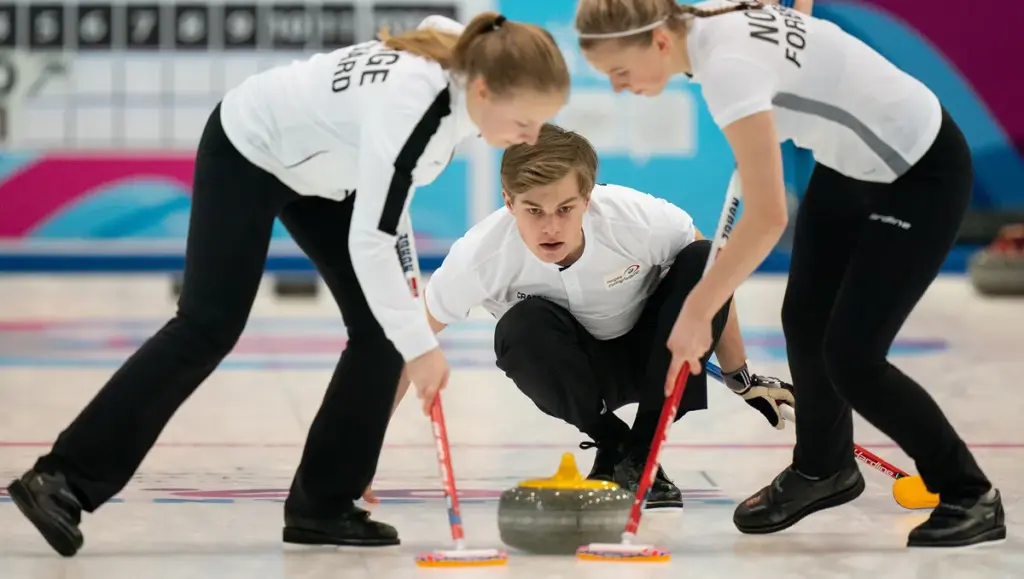
The 2026 Canadian Masters Championship is currently taking place at the Grande Prairie Curling Centre, featuring 22 men’s and women’s teams from across Canada. The event has drawn attention not only for the competition but also due to a recent controversy surrounding double-touch infractions in curling.
Just before the championship began, a video surfaced showing Oskar Eriksson demonstrating a double-touch infraction. This incident has reignited discussions that began during the Milano-Cortina Olympics in February, where Marc Kennedy was accused of breaking the rules by touching the granite of the stone after its release.
Oskar Eriksson commented on the skill involved in making precise adjustments during gameplay, stating, “At our level, just altering a stone by five centimetres on the other side, knowing how little you need to do to make that correction, is also a skill.” He also expressed frustration, saying, “Evil unfortunately wins sometimes,” reflecting the contentious nature of the ongoing debate.
In contrast, Eugene Hritzuk defended the integrity of the game, asserting, “I don’t think there’s anything in that video that supports the idea that anything very wrong happened,” emphasizing that curling is traditionally viewed as a gentlemen’s game.
The championship features draw times at 10 a.m., 2:30 p.m., and 7:30 p.m. daily, with Alberta represented by Kurt Balderston’s rink on the men’s side and Glenys Bakker’s rink for the ladies. The stakes are high as teams compete for the title amidst the backdrop of this controversy.
Recently, the Canadian team skipped by Matt Dunstone faced a setback, losing 9-6 to Sweden in the men’s world curling championship, further complicating the narrative for Canadian teams in the international curling scene.
The double-touch debate is not new; it has been examined in the past, but the current events have brought it back into the spotlight. As the championship progresses, the implications of this controversy could have lasting effects on the sport and its players.
As the situation develops, the curling community is watching closely to see how this controversy will influence the remainder of the championship and the broader discourse on rules and integrity in the sport.