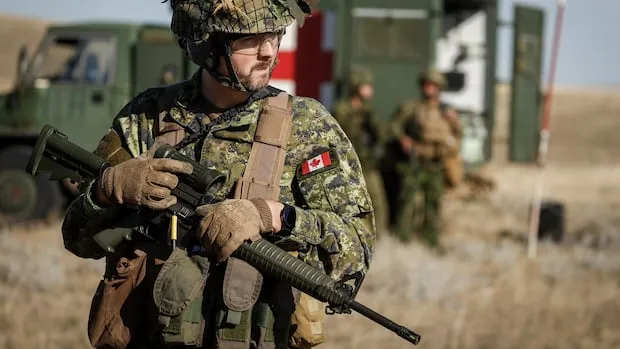
The central question surrounding the recent procurement of rifles by the Canadian Armed Forces is: why is the military replacing its aging C7 and C8 rifles? The answer lies in the need for modern, reliable equipment, as the current rifles have been in service for 35 years and are beyond their shelf life.
The Canadian government has announced a significant order of 30,000 assault rifles from Colt Canada, valued at $307 million. This initial order is part of a broader plan that could see up to 300,000 additional rifles procured in the future.
According to Stephen Fuhr, a former Member of Parliament and current advocate for military modernization, “Those C7s and C8s had served well for 35 years, but they were beyond their shelf life and they needed to be replaced.” This sentiment underscores the urgency of updating the military’s arsenal.
The new rifles are expected to be delivered over the next three years, with the first tranche arriving as early as 2027. Colt Canada has committed to ensuring that at least 80 percent of the components used in these rifles will be sourced from Canadian suppliers, which is a significant boost for local industry.
The second phase of this procurement will include an additional 19,207 GS variants and 16,195 full spectrum rifles, bringing the total number of rifles ordered to 65,402. The overall program could potentially be worth between $500 million and $1 billion, reflecting the Canadian government’s substantial investment in defense.
Lt.-Gen. Mike Wright emphasized the importance of this procurement, stating, “This represents tangible progress, and a clear example of how we can move with greater agility to bring modern, reliable equipment to soldiers.” This initiative is seen as a critical step in enhancing the operational capabilities of the Canadian Armed Forces.
The decision to modernize the military’s equipment comes in the context of a broader investment of $93.3 billion in the Department of National Defence, aimed at ensuring that Canadian forces are well-equipped to meet contemporary challenges.
As the procurement process unfolds, details remain unconfirmed regarding the specific models and features of the rifles to be delivered. However, the commitment to a risk-based approach in the procurement process aims to streamline the acquisition of these essential military assets.
In summary, the partnership between Colt Canada and the Canadian Armed Forces marks a significant development in the modernization of military equipment, addressing the pressing need for updated firearms that meet current operational demands.