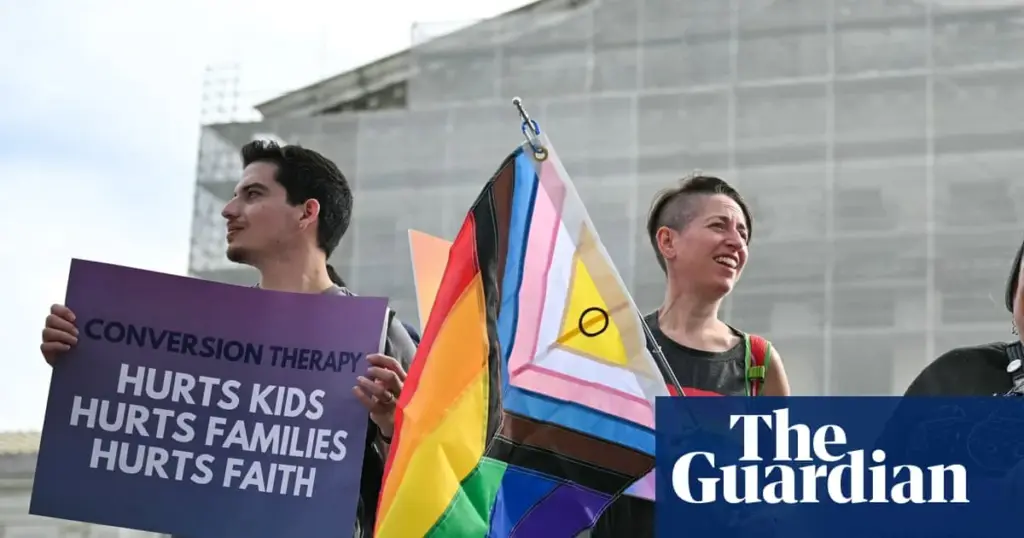
In a significant ruling on March 31, 2026, the U.S. Supreme Court decided against Colorado’s ban on conversion therapy for minors, delivering an 8-1 verdict that could reshape the legal landscape regarding similar laws across the United States. The case was brought forth by Kaley Chiles, a licensed therapist who challenged the 2019 law that prohibited practices aimed at changing an individual’s sexual orientation or gender identity.
The Supreme Court’s decision is poised to impact over 20 states that have enacted similar legislation. The Colorado law defined conversion therapy broadly, encompassing any practice that attempts to alter a person’s sexual orientation or gender identity. Although the law included provisions for fines up to $5,000 and potential license suspension for violators, no therapists had faced sanctions under it since its enactment.
Justice Neil Gorsuch, writing for the majority, argued that Colorado’s law infringes upon free speech rights, stating, “The First Amendment stands as a shield against any effort to enforce orthodoxy in thought or speech in this country.” This perspective aligns with a growing trend in the Supreme Court’s recent rulings, which have often favored religious and free speech rights in cases related to LGBTQ+ issues.
Key moments
The ruling has drawn sharp criticism from LGBTQ+ advocates, who view it as a dangerous regression for rights that have been hard-won over the past decades. Polly Crozier, a representative from a prominent LGBTQ+ advocacy group, remarked, “This is a dangerous practice that has been condemned by every major medical association in the country.” The decision marks the third significant defeat for LGBTQ+ rights advocates within the last year, following earlier rulings that favored religious discrimination claims related to LGBTQ+ rights.
In a dissenting opinion, Justice Ketanji Brown Jackson expressed concern that states should maintain the authority to regulate healthcare, including imposing speech restrictions when necessary. Her dissent, which spanned 35 pages, highlighted the potential harm that could arise from allowing conversion therapy practices to continue unregulated.
Supporters of the ruling, including attorney Kelly Shackelford, argued that the government should not censor professional speech simply because it disapproves of that speech. Shackelford stated, “Americans should never have their professional speech censored simply because the government disfavors that speech.” This sentiment reflects a broader legal philosophy that prioritizes free speech over regulatory measures aimed at protecting individuals from potentially harmful practices.
The Colorado law was enacted in response to widespread claims from healthcare professionals that conversion therapy is not only ineffective but also poses significant risks to mental health. The law was intended to safeguard minors from practices deemed harmful by major medical organizations. However, the Supreme Court’s ruling now raises questions about the future of such protective measures in other states.
As reactions continue to unfold, the implications of this ruling will likely resonate beyond Colorado, influencing debates and legal challenges in states with similar laws. The decision underscores the ongoing tensions between free speech rights and the protection of vulnerable populations, particularly minors seeking affirmation of their identities.