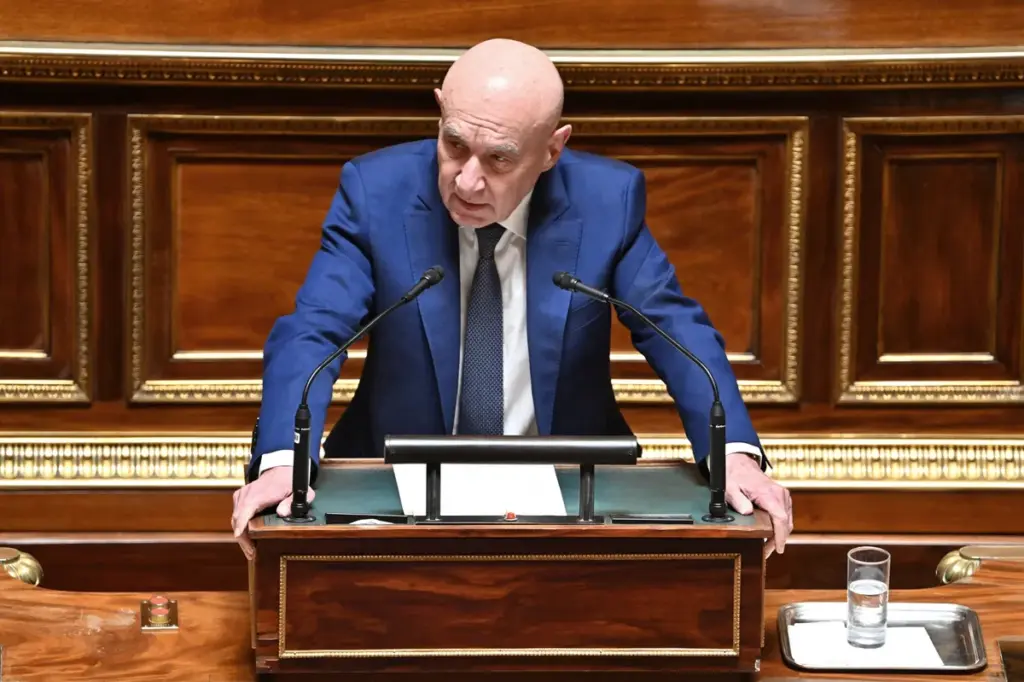
Claude Malhuret, a French senator known for his controversial remarks, has recently intensified his critique of Donald Trump’s administration. He previously likened Trump’s presidency to Nero’s Court, but now claims, “A year ago, here in France, I compared Trump’s presidency to Nero’s Court. I was wrong. It’s the miracle court.” This statement reflects his evolving perspective on the perceived chaos within the Trump administration.
Malhuret described the current state of affairs under Trump as a circus, stating, “When a clown settles in a palace, he does not become king, it is the palace that becomes a circus.” His comments suggest a deep dissatisfaction with the leadership style and effectiveness of Trump and his cabinet.
In his critique, Malhuret pointed to the controversial figures within Trump’s cabinet, labeling them as incompetent. He accused Trump of exploiting his position for personal gain, asserting, “There isn’t a single country where Trump did not take advantage of the situation to enrich himself without ever forgetting his family.” This accusation raises questions about the ethical implications of Trump’s presidency.
Malhuret also addressed the global ramifications of the Epstein affair, stating, “Every time the Epstein affair resurfaces, bombs explode somewhere in the world and cause a distraction!” This remark highlights his concern over the distractions that such scandals create in international relations.
Furthermore, he claimed that Trump’s administration has initiated more military strikes than the Biden administration, criticizing the lack of a clear strategy in U.S. military interventions. He expressed particular concern over the consequences of U.S. foreign policy on the Iranian population, indicating a broader apprehension about the impact of American actions abroad.
In addition to his critique of Trump, Malhuret warned against the rise of political extremes in France, calling for a strategic awakening in Europe regarding security and decision-making. His remarks suggest a desire for a more unified and strategic approach to governance in the face of rising populism.
Malhuret’s statements reflect a significant critique of not only Trump but also the broader implications of his presidency on global politics. Observers note that such critiques may influence European perspectives on U.S. foreign policy and its implications for transatlantic relations.
As the political landscape continues to evolve, it remains to be seen how Malhuret’s comments will resonate with both European leaders and the public. Details remain unconfirmed regarding any immediate political repercussions from his statements.