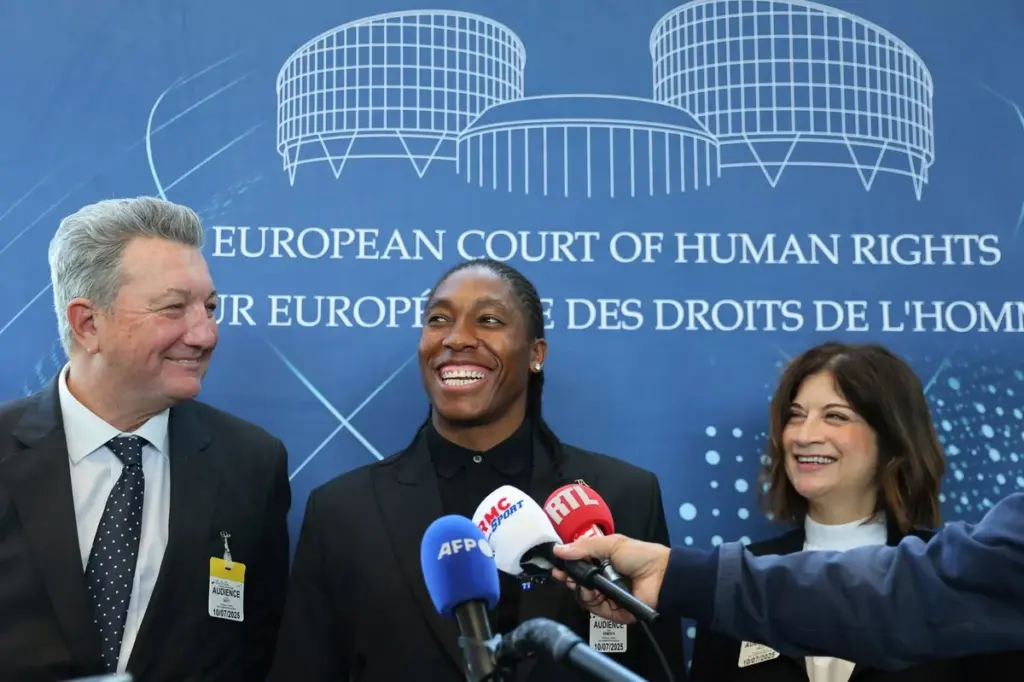
Before the recent developments, Caster Semenya was already facing challenges regarding her eligibility to compete in women’s events, particularly the 800 metres, due to World Athletics’ regulations concerning testosterone levels. Since 2019, she has been ineligible, having refused to medically reduce her testosterone levels to comply with these eligibility criteria.
However, the landscape shifted dramatically with the International Olympic Committee (IOC) announcing a new policy that bans transgender women from competing in female events at the Olympic Games. This policy also restricts female athletes with differences in sex development (DSD), which includes Semenya herself.
The IOC’s policy is not retroactive and does not apply to grassroots or recreational sports programs. It was implemented after consulting over 1,000 athletes, indicating a significant move towards addressing concerns about fairness in competition. The IOC’s research suggests that being born male can provide physical advantages in sports, with male performance advantages estimated to be 10-12% in most running and swimming events, and even higher in explosive power events.
This new policy has immediate implications for Semenya, who has been vocal about her situation. She criticized the IOC for ignoring the experiences of athletes and succumbing to political pressure, stating, “I will not be used as a token voice.” Her concerns reflect a broader criticism of the IOC’s approach, which some experts argue lacks a scientific basis and risks harming young athletes.
Furthermore, the IOC’s policy aligns with U.S. President Trump’s executive order on women’s sports, suggesting a political dimension to the decision. Kirsty Coventry, a key figure in the IOC, emphasized that the policy was a priority for her long before external pressures emerged.
As the IOC prepares to implement this policy across all Olympic events, including youth competitions, the future remains uncertain for athletes like Semenya. Details remain unconfirmed regarding how many transgender women are currently competing at an Olympic level and the exact impact of the new policy on future competitions.
With 132 years of IOC history by 2025, this policy marks a significant moment in the ongoing debate over gender and sport, raising questions about fairness, inclusion, and the rights of athletes.