The wider picture
The planned expansion of Medical Assistance in Dying (MAiD) to include individuals with mental illness as their sole underlying condition has faced organized opposition from various groups across Canada. This expansion is scheduled to take effect on March 17, 2027, prompting concerns among mental health advocates and religious organizations alike. In response to this impending change, Bill C-218, known as the Right to Recover Act, has been introduced to prohibit MAiD in such cases.
Bill C-218 aims to ensure that individuals struggling with severe mental health challenges receive treatment, compassion, and support rather than being offered a path to end their lives. Tamara Jansen, a key proponent of the bill, has stated that allowing MAiD for those with mental illness is “a line that should never be crossed.” This sentiment reflects a growing concern that vulnerable individuals may be pressured into choosing assisted dying during their most challenging moments.
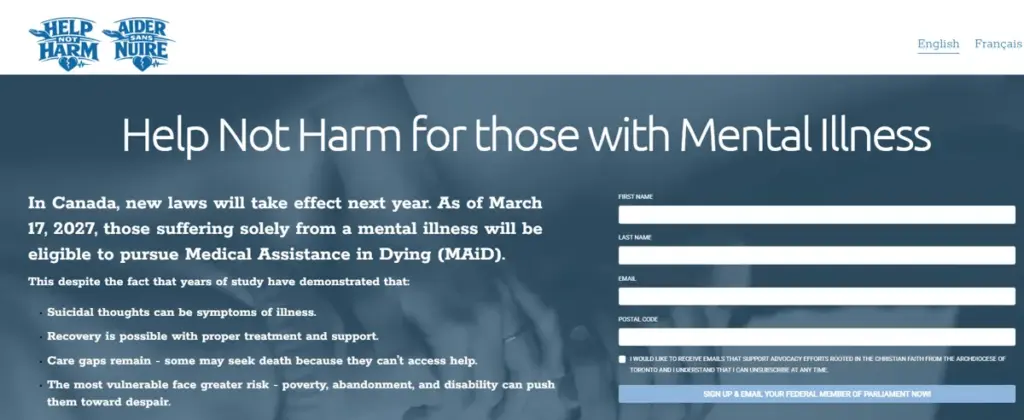
In addition to Bill C-218, the Archdiocese of Toronto has launched the Help Not Harm campaign, urging Catholics and the broader public to support the bill. Neil MacCarthy, a representative from the Archdiocese, welcomed the solidarity shown by dioceses across Canada in this initiative, emphasizing the need for a compassionate approach to mental health issues.
Danielle Smith, the Premier of Alberta, has also voiced her support for Bill C-218, stating, “Those struggling with severe mental health challenges need treatment, compassion and support, not a path to end their life at what may be their lowest moment.” This statement underscores the growing recognition of the need for mental health resources and support systems in the face of legislative changes regarding assisted dying.
Meanwhile, other legislative measures are also being discussed in Canada. Bill 18, the Safeguards for Last Resort Termination of Life Act, was introduced in Alberta on March 18 to bar assisted suicide for individuals with mental illness as their sole underlying condition. This bill aligns with the objectives of Bill C-218 and reflects a broader movement to protect vulnerable populations.
As the debate surrounding Bill C-218 and the expansion of MAiD continues, observers are closely monitoring the situation. The federal government has yet to respond to the growing calls for amendments to the proposed legislation. The outcome of these discussions could significantly impact the future of mental health care and assisted dying in Canada.
With the House of Commons having recently voted on related legislation, such as Bill C-9, which advanced to the Senate, the political landscape surrounding these issues remains dynamic. The outcome of these legislative efforts will likely shape the discourse on mental health and assisted dying in the coming years.
As the situation evolves, advocates for mental health and those opposing the expansion of MAiD are expected to continue their efforts to influence public opinion and legislative outcomes. The implications of Bill C-218 and similar initiatives will be closely watched as they unfold, highlighting the ongoing struggle to balance individual rights with the need for compassion and care in mental health treatment.