Key moments
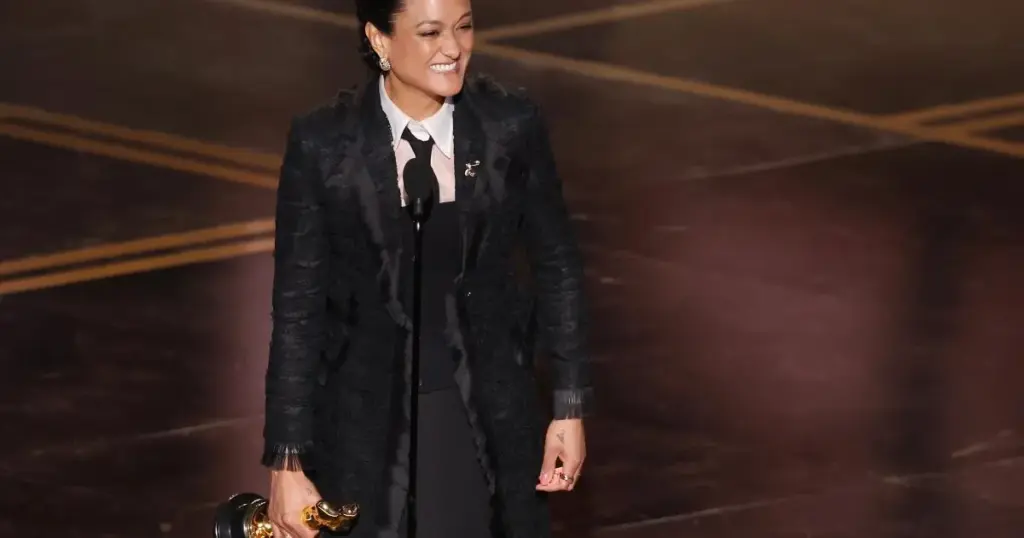
In a groundbreaking achievement, Autumn Durald Arkapaw won the Oscar for cinematography on March 15, 2026, becoming the first woman and the first woman of color to receive this prestigious award. Her win came during a night filled with excitement and recognition for diverse talents in the film industry, particularly for her work on the film “Sinners.” This film, which received a record-breaking 16 nominations at the Oscars, is set in 1930s Mississippi and explores themes of vampires, blues music, and cultural appropriation.
Arkapaw’s innovative cinematography utilized Imax 65mm and Ultra Panavision formats, showcasing her technical prowess and artistic vision. The film’s unique narrative and visual style resonated with audiences and critics alike, leading to its historic number of nominations. Prior to Arkapaw’s win, only three women had ever been nominated in the cinematography category: Rachel Morrison, Ari Wegner, and Mandy Walker.
During her acceptance speech, Arkapaw expressed heartfelt gratitude, stating, “I don’t get here without you guys,” acknowledging the support she received throughout her career. She specifically thanked Ryan Coogler, her collaborator, for believing in her talent and vision. Arkapaw’s emotional moment was further highlighted when she invited all the women in the audience to stand, celebrating their contributions to the film industry.
At 46 years old, Arkapaw, who is of Filipino and Creole descent, has made significant strides in a field that has historically been dominated by men. Her victory is not only a personal achievement but also a symbolic moment for women and people of color in cinematography. The film industry has been gradually recognizing the importance of diversity and inclusion, and Arkapaw’s win is a testament to this ongoing change.
Reflecting on the film “Sinners,” Arkapaw mentioned, “When I read the story, it felt very close to home,” indicating her personal connection to the narrative and its themes. She emphasized the love and dedication that went into the making of the film, stating, “This film has so much love that was poured into it on set and I think it really connected with a lot of people.” This connection likely contributed to the film’s success and the recognition it received at the Oscars.
As the night unfolded, Arkapaw’s win was considered one of the emotional highs, capturing the attention of both the audience and viewers at home. Her achievement serves as an inspiration for aspiring filmmakers and cinematographers, particularly women and individuals from underrepresented backgrounds. The film industry continues to evolve, and Arkapaw’s historic win is a significant milestone in this journey.
While the celebration of Arkapaw’s win is widespread, it also highlights the ongoing challenges faced by women in the film industry. Despite the progress made, there is still a long way to go in achieving true equality and representation. Arkapaw’s success is a reminder of the importance of supporting diverse voices and stories in cinema.
As reactions pour in from industry professionals and fans alike, Arkapaw’s win is being hailed as a pivotal moment in the Oscars’ history. Her story is not just about an individual accolade but about the broader implications for the future of filmmaking and the representation of women and people of color in Hollywood. Details remain unconfirmed regarding the long-term impact of her win, but it is clear that Autumn Durald Arkapaw has left an indelible mark on the film industry.