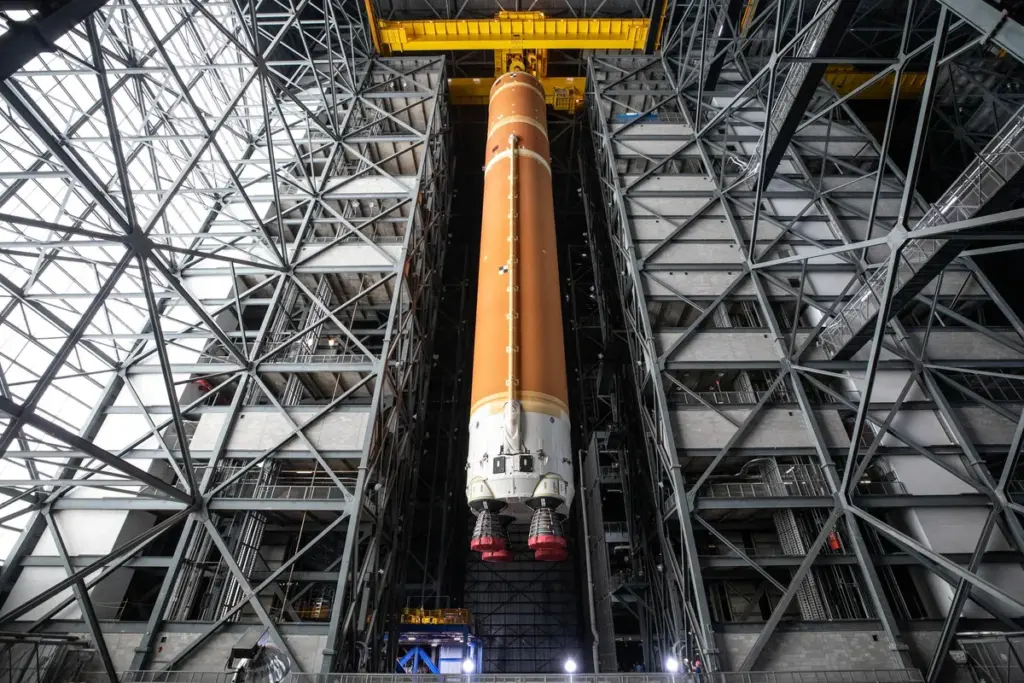
What does the upcoming Artemis II launch signify for NASA’s lunar exploration efforts? Scheduled for January 17, 2026, this mission marks a pivotal moment as NASA returns to the Moon for the first time since the 1970s.
The Artemis II mission will utilize the Space Launch System (SLS) rocket and the Orion spacecraft, with a crew of four astronauts: Reid Wiseman, Victor Glover, Christina Koch, and Jeremy Hansen. This mission will involve a 10-day journey around the Moon, aiming to build on the successes of the uncrewed Artemis I flight.
NASA plans to initiate the launch countdown approximately two days before liftoff, with the launch team arriving at their stations 49 hours prior to the launch. The launch window will last for six minutes, during which the team must execute the launch sequence.
As part of the broader Artemis program, NASA intends to invest $20 billion in establishing a lunar base, which is crucial for sustaining a long-term human presence on the Moon. This program aims not only to return humans to the lunar surface but also to pave the way for future exploration of Mars.
During the uncrewed Artemis I flight, the Orion capsule’s heat shield sustained damage, raising questions about the spacecraft’s performance. Scott Pace, a key figure in the program, emphasized the importance of the solid rocket boosters’ performance on launch day.
Critics of the Artemis program have questioned its pace and objectives. A pertinent question remains: Can Artemis II inject enough momentum into NASA’s return-to-the-Moon program to quell its critics?
As the launch date approaches, NASA continues to refine its plans and address any potential issues. Details remain unconfirmed regarding the final preparations and any last-minute adjustments to the mission timeline.
The Artemis II mission is a significant step in NASA’s efforts to establish a sustainable human presence on the Moon, building on the legacy of the Apollo missions from over 50 years ago.
With the world watching, the Artemis II launch will be a critical moment in the history of space exploration, potentially setting the stage for future missions beyond the Moon.