The Artemis 2 mission concluded with a successful splashdown in the Pacific Ocean off the coast of San Diego, California, at 8:07 p.m. ET. This event marks a significant milestone for NASA, demonstrating the agency’s advancements in crewed space exploration.
During re-entry, the spacecraft reached speeds of nearly 40,000 km/h and experienced temperatures of approximately 3,000 C. The astronauts aboard faced nearly 4 Gs during the re-entry sequence, which lasted about 14 minutes.
As the capsule descended, two drogue parachutes deployed at about 22,000 feet (6,705 m), followed by the deployment of three main parachutes at approximately 1,800 metres. The spacecraft ultimately splashed down at a speed of 32 km/h.
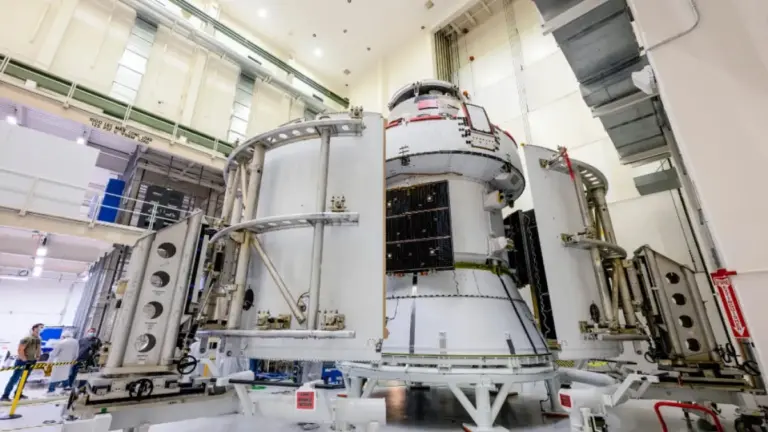
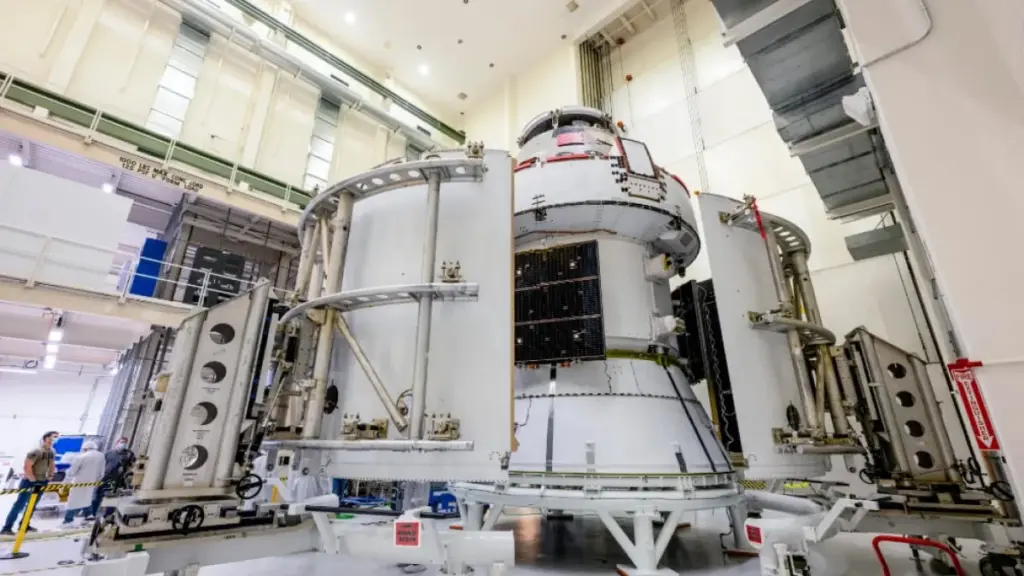
The recovery operation was coordinated by the USS John P. Murtha, which was on standby to assist the astronauts as they exited the Orion capsule. “Riding a fireball through the atmosphere is profound, as well. I’m gonna be thinking about and talking about all of these things for the rest of my life,” said astronaut Victor Glover.
After ensuring the area was safe, the recovery team opened the Orion hatch and helped the astronauts from their seats to a large inflatable raft referred to as the “front porch.” Liliana Villarreal, a member of the recovery team, explained the process: “Once all four astronauts are on the front porch, we will tow the capsule away, and the team will wait…. Two helicopters are going to rotate, picking up all four crew members before they return to the recovery ship within a few minutes of each other.”
The Artemis II mission is a follow-up to the uncrewed Artemis I mission, and it represents a critical step in NASA’s plans for future lunar exploration. Following medical evaluations, the astronauts will return to the Johnson Space Center in Houston.
NASA had conducted an investigation and modified re-entry procedures after the Artemis I mission to enhance safety and performance. The heat shield used during the mission was called Avcoat, designed to withstand the extreme conditions of re-entry.
As the space agency looks ahead, further developments in crewed missions to the Moon and beyond are anticipated. Details remain unconfirmed regarding the timeline for subsequent missions and the next steps in NASA’s Artemis program.