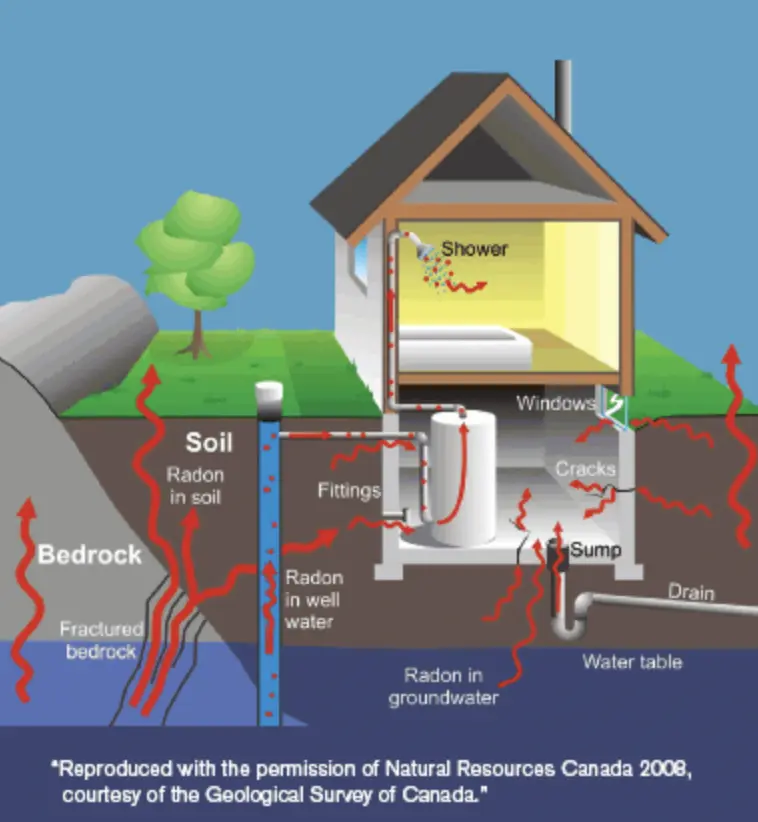
Canadian homeowners often focus on insulation, heating bills, mould, or humidity, yet another issue deserves the same attention. Health Canada says every home has some level of radon, and the only way to know whether a home has a problem is to test it. That matters because long-term exposure is linked to lung cancer risk, even when a property looks clean, dry, and well maintained.
For many families, the concern feels abstract until they learn that radon gas is invisible, odourless, and tasteless, which means it can build up quietly over years. In Canadian housing, indoor levels vary widely from one home to the next, even on the same street, so assumptions based on age, style, or neighbourhood are not enough.
Why Indoor Air Risks Deserve More Attention In Canada
Before people decide how to respond, they usually want a plain-language explanation of the issue. That makes education important, because public awareness still lags behind the scale of the risk in many parts of Canada.
The Basic Science Behind A Hidden Hazard
For anyone still asking what is radon, the simplest answer is that it is a radioactive gas created by the natural breakdown of uranium in soil and rock. Outdoors it disperses quickly, but indoors it can accumulate, especially in lower levels of a dwelling where air exchange is limited.
People sometimes confuse this issue with other indoor air topics or even with argon gas, but the Canadian concern here is different. The core problem is radon gas entering from the ground and concentrating inside occupied space over time.
Why Health Experts Treat Long-Term Exposure Seriously
Health Canada says radon exposure is the number one cause of lung cancer in non-smokers in Canada and contributes to thousands of deaths each year. The danger is not that a homeowner suddenly develops radiation poisoning after one day indoors; the concern is cumulative exposure over many years.
That is also why the issue should not be framed around immediate radiation side effects that people can easily feel at home. Instead, the real public-health problem is that radon can raise long-term lung cancer risk without obvious warning signs in day-to-day life.
How The Gas Enters Homes And Where It Builds Up
A safe-looking basement does not guarantee low readings. Soil gas follows pressure differences, and modern homes that are tightly sealed for energy efficiency can still allow contaminated air to move indoors through small openings.
Common Entry Routes At Ground Level
When people picture how exposure starts in the house, they often imagine one dramatic crack, but the reality is usually more ordinary. Soil gas can enter through foundation cracks, floor slabs, construction joints, gaps around service pipes, drains, sumps, and other openings where the building touches the ground.
Because of that, radon gas is usually highest in basements and crawl spaces, though elevated readings can also appear in other lived-in areas. Health Canada also notes that home design, ventilation patterns, weather, and occupant habits can all affect readings over time.
Why Nearby Homes Can Have Different Results
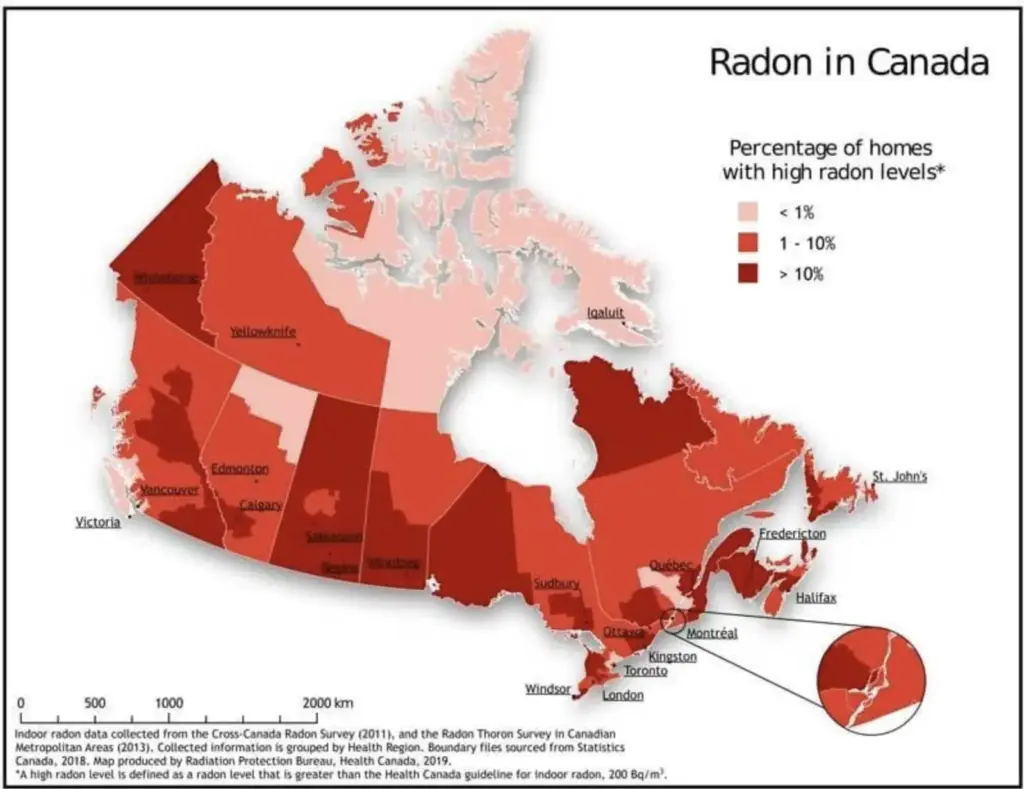
Another reason testing matters is that there is no reliable shortcut for predicting a result from postal code alone. Health Canada says indoor concentrations can vary significantly over time, and even neighbouring houses may produce very different numbers.
So when a homeowner asks what is radon doing in one home but not another, the answer usually comes back to geology, openings in the foundation, air pressure, ventilation, and lifestyle factors working together. In practice, that means each property needs its own measurement rather than a guess based on local reputation.
How To Test A Canadian Home Properly
Testing sounds technical, but the decision itself is straightforward. Health Canada says there are two practical options: buy a do-it-yourself kit or hire a measurement professional.
Choosing The Right Test Duration
The key point is that a proper home check should be long term. Health Canada recommends a test of at least three months, and its current guidance says testing over roughly 3 to 12 months gives the best estimate of the annual average.
That recommendation exists because radon readings change with season, occupancy, weather, and ventilation. A very short measurement may be useful in limited circumstances, but it is not the preferred basis for a calm, confident decision about indoor exposure.
Where To Place The Detector And What To Record
Placement matters almost as much as duration. Health Canada advises putting the detector on the lowest lived-in level, such as a basement or first floor where residents spend at least four hours a day.
Before looking at the numbers, it helps to see the logic of a proper test setup in one place.
| Testing Step | What To Do | Why It Matters |
| Choose the lowest lived-in level | Place the detector in a basement or first-floor room used regularly | Lower levels are more likely to collect soil gases |
| Keep the test long enough | Leave it in place for at least 3 months | Long-term results better reflect annual exposure |
| Follow kit instructions carefully | Note start and stop dates and avoid moving the device | Consistent handling improves reliability |
| Review the lab result, not a guess | Use the measured average to decide next steps | Neighbourhood assumptions are not enough |
This scheme makes it easier to compare results with Canadian recommendations and decide whether further action is needed. It also prevents the common mistake of treating a casual reading as a final answer.
What Test Results Mean And When To Take Action
Once the lab report arrives, most homeowners want to know whether the number calls for urgency or just monitoring. In Canada, the main benchmark is Health Canada’s guideline of 200 Bq/m³, but the agency also states that no level is considered risk free.
Reading The Result Against The Guideline
If a result is below 200 Bq/m³, Health Canada says the risk is smaller, yet it still does not describe the level as completely safe. If a result is above the guideline, the goal is to reduce concentrations as low as reasonably achievable rather than simply doing the minimum.
A homeowner who learns that radon is above the guideline should think in terms of practical risk reduction, not panic. The next decision is about timing, the right contractor, and the repair method most likely to lower the number in that specific building.
A Practical Action Timeline For Homeowners
The timing rules are easier to follow when they are broken into steps instead of buried inside technical guidance.
- If the result is below 200 Bq/m³, keep the report, stay aware of future renovations, and consider retesting if the building changes significantly.
- If the result is between 200 and 600 Bq/m³, Health Canada recommends taking corrective action within 2 years.
- If the result is above 600 Bq/m³, Health Canada recommends taking corrective action within 1 year.
This timeline helps Canadian households prioritize the response without losing sight of the bigger goal, which is sustained reduction rather than a one-time reaction. In other words, a measured plan usually works better than ignoring the issue until the next heating season.
How Mitigation Usually Works In Real Homes
Once a high reading is confirmed, most households do not need a dramatic rebuild. In many cases, the job is to interrupt the pathway by which soil gases enter and then vent them safely outdoors.
The Most Effective Ways To Reduce Indoor Exposure
Health Canada describes active sub-slab depressurization, also called active soil depressurization, as the most effective and reliable reduction technique. In practical terms, a certified contractor may install a fan-and-pipe radon mitigation system that draws soil gases from beneath the slab and exhausts them outside.
Before choosing a contractor, it helps to understand how different mitigation measures usually fit together in real homes.
- Active soil depressurization is generally the leading option for the biggest and most reliable reduction.
- Sealing obvious openings may support other repairs, but sealing alone is usually not the main solution.
- Follow-up testing matters because the final decision should be based on measured post-repair performance.
- Certified professionals are preferred because the design must match the structure of the home.
Taken together, these points explain why a professional plan is often more effective than random do-it-yourself fixes. Health Canada’s follow-up research found that active soil depressurization delivered the strongest average reductions, especially when installed by trained or certified professionals.
Choosing Qualified Help In Canada
Health Canada recommends using professionals certified through the Canadian National Radon Proficiency Program when radon reduction is needed. Certification is especially important when a homeowner wants a durable solution rather than a quick patch that fails the next time indoor pressure patterns shift.
A properly designed radon mitigation system should also be followed by a new test to confirm that the repair worked as intended. That matters because radon gas control is about proven results, not just installation paperwork or a salesperson’s promise.
Prevention, Renovations, And Long-Term Follow-Up
Homeowners often ask whether they only need to think about this issue once. In reality, testing and reduction decisions connect to renovation plans, energy retrofits, occupancy patterns, and how air moves through the building over time.
Why Renovations Can Change The Result
Changes to ventilation, air sealing, or the lower level of a building can alter indoor pressure and airflow. That is one reason Health Canada advises retesting after substantial changes, especially during the first heating season after the work is complete.
This is also why a family should not assume that once radon was low, it will stay low forever. A finished basement, a different HVAC schedule, or a tighter building envelope can all influence how soil gases behave indoors.
How To Build A Practical Homeowner Routine
A sensible routine starts with a long-term test, keeps the report on file, and links future action to measured evidence instead of guesswork. When comparing contractors, ask for a written scope, a post-work testing plan, and an estimate in CAD so you can compare like with like. For Canadian households, that is usually more useful than chasing rumours about “safe” neighbourhoods or relying on a seller’s old verbal assurance.
Over time, the smartest approach is simple: test, interpret the result correctly, reduce levels when needed, and re-test after meaningful changes. That mindset turns radon gas from a hidden worry into a manageable home-health issue.
FAQ
Is A One-Week Test Good Enough For A Home Sale?
A very short test may give a snapshot, but it does not offer the same confidence as a long-term measurement. For a home you plan to live in, a multi-month result is the better basis for a health decision.
Do Upper-Floor Condos Need To Be Checked?
Lower units are usually the main priority, but Health Canada notes that elevated readings can sometimes occur above the third floor because air can move through shafts or other openings. Concerned condo residents can still choose to test.
Can Opening Windows Solve The Problem By Itself?
Extra ventilation may change indoor readings temporarily, but it is not usually treated as a dependable long-term fix for a high result. When levels exceed the guideline, the preferred response is a proper reduction strategy backed by follow-up measurement.
Should Smokers In The Household Treat The Issue More Urgently?
Yes. Canadian public-health guidance says smoking and indoor exposure together create a higher lung cancer risk than either factor alone, so families with smokers have an even stronger reason to test and act promptly.