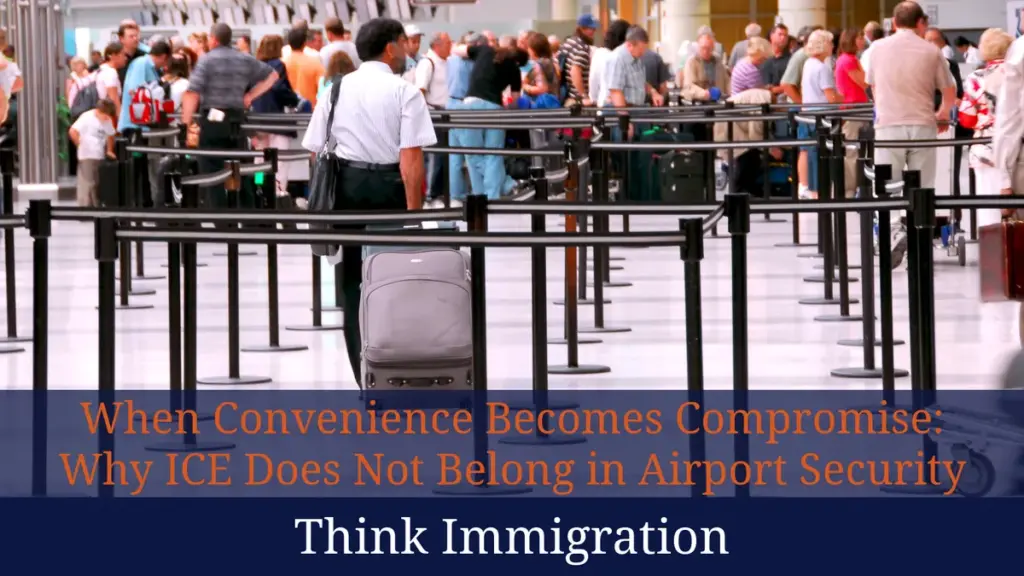
On March 25, 2026, ICE agents were deployed to assist TSA at various airports across the United States due to significant staffing shortages. This deployment comes during a partial government shutdown, which has resulted in high absenteeism rates among TSA officers. For instance, TSA absentee rates reached as high as 43% at Houston’s William P. Hobby Airport and 39.8% at George Bush Intercontinental Airport.
ICE officers have been reported at major airports, including Chicago O’Hare, Hartsfield-Jackson Atlanta, and New York’s JFK. However, it is important to note that ICE officers are not trained for aviation security tasks, such as operating X-ray machines. Despite this, their presence has been justified by the need to reduce disruptions for travelers.
Criticism has emerged from TSA officers who argue that the presence of ICE agents adds confusion to the airport environment. Tom Homan, a former ICE official, stated, “We’re just simply helping our fellow officers at TSA.” However, the deployment has raised concerns about the blurring of lines between security and immigration enforcement.
One incident at San Francisco International Airport highlighted these concerns when ICE agents arrested a mother and child, both Guatemalan nationals, after being tipped off by TSA. This incident drew condemnation from local officials and Congress, with Representative Doris Matsui expressing her anger over the video of the arrest, stating, “I am deeply angered by the video released of a Sacramento mother being forcibly detained by ICE in front of her young daughter.”
The Trump administration’s expansion of data sharing between TSA and ICE last year marked a significant shift in immigration enforcement practices at airports. This has led to ongoing debates about the role of ICE in airport security and the implications for public safety.
As the situation evolves, the exact duration of ICE officers’ presence at airports remains unconfirmed, and the correlation between TSA absentee rates and ICE deployments is unclear. The presence of ICE at airports continues to raise questions about trust and safety, with concerns that public safety depends on the trust of travelers. As one critic noted, “Public safety depends on trust. When people feel uncertain or intimidated, that trust erodes.”