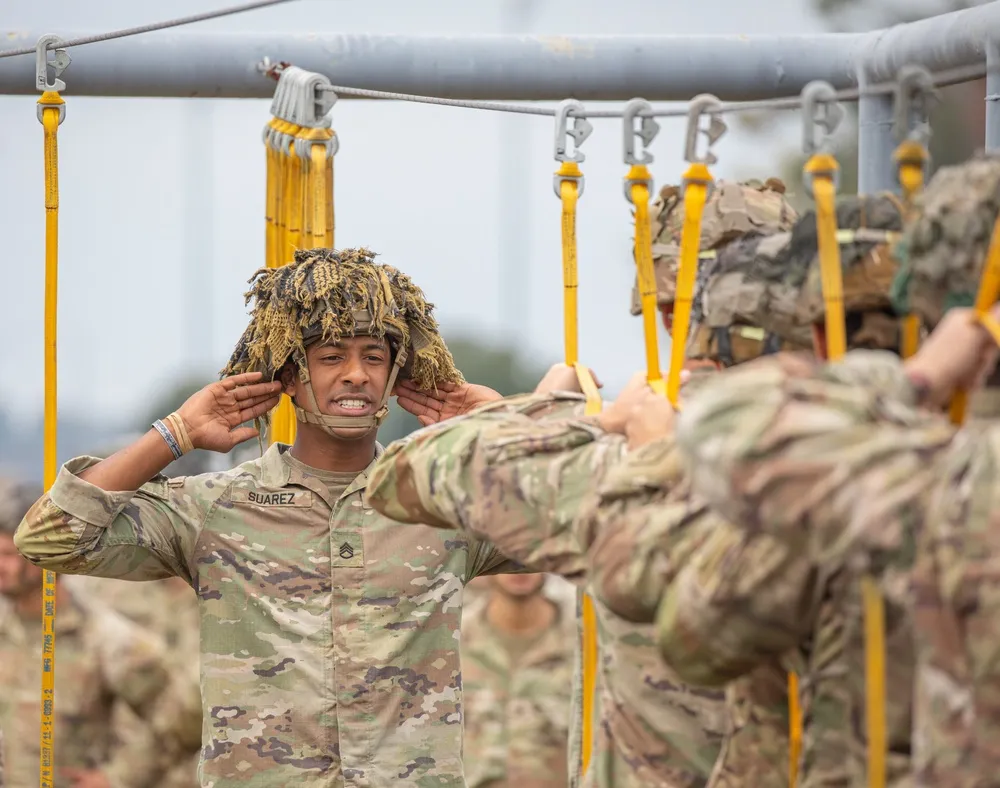
Before the recent developments, the 82nd Airborne Division was primarily stationed at Fort Bragg, maintaining a readiness posture with a brigade of approximately 3,000 soldiers prepared to deploy globally on short notice. The expectation was that this elite unit would remain in a supportive role, ready to respond to various global contingencies.
However, a decisive moment occurred as the conflict with Iran entered its fourth week, prompting the Pentagon to announce the deployment of leadership from the 82nd Airborne Division to the Middle East. This deployment will include the commanding general and members of his headquarters staff, marking a shift from a purely supportive role to a more active involvement in the ongoing military operations.
The immediate impact of this deployment is the expected movement of fewer than 1,500 troops from the 82nd Airborne Division to the region. This decision comes alongside reports that the U.S. military has conducted over 9,000 combat flights, striking an equal number of military targets in Iran. Additionally, thousands of Marines are already en route to the Middle East, indicating a significant escalation in U.S. military presence.
Experts note that the involvement of the 82nd Airborne Division could enhance operational capabilities in the region, although it remains unclear what specific roles these additional paratroopers might play. The situation is fluid, and the exact timing and details of the deployment of a brigade combat team from the division are not confirmed.
President Trump remarked on the situation, stating, “The other side, I can tell you, they’d like to make a deal,” suggesting that diplomatic avenues may still be pursued despite the military escalation.
As the U.S. continues its military operations in Iran, the deployment of the 82nd Airborne Division signifies a critical juncture in the conflict, with potential ramifications for both U.S. forces and Iranian military operations.
Details remain unconfirmed regarding the full scope of the deployment and the strategic objectives behind it, leaving many questions about the future of U.S. military engagement in the region.