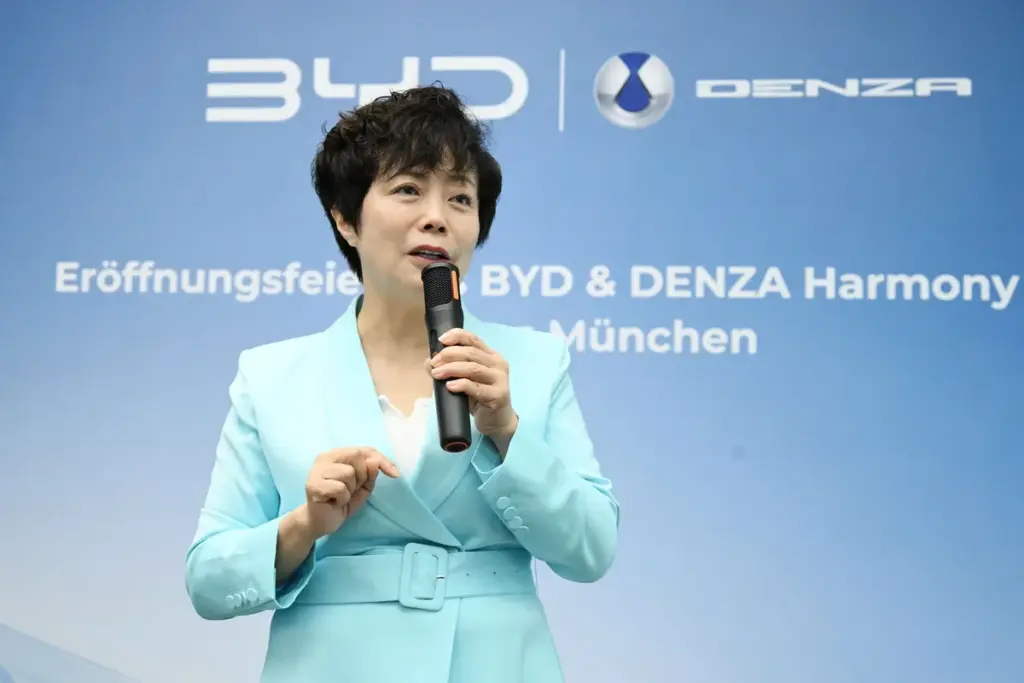
“I don’t think a JV will work,” stated Stella Li, Vice President of BYD, as the company navigates its plans for entering the Canadian electric vehicle market. This statement reflects the challenges and strategic considerations BYD faces in light of recent trade developments and tariffs affecting the import of electric vehicles from China.
In 2024, BYD paused its plans to export electric vehicles from China to Canada due to a steep 100% import tariff. However, a new agreement between Canada and China has opened the door for a more favorable tariff structure, allowing up to 49,000 Chinese electric vehicles to enter Canada annually at a significantly reduced tariff rate of 6.1%. This shift has prompted BYD to reconsider its approach to the Canadian market.
Currently, BYD operates an electric bus assembly plant in Newmarket, Ontario, which has been in operation since 2019. The company is now contemplating the establishment of its own production facility in Canada, rather than pursuing a joint venture. This move aligns with BYD’s broader ambition to sell over 1.3 million vehicles overseas in 2026, as it seeks to expand its footprint in North America.
As part of its strategy, BYD is exploring partnerships with Canadian suppliers to facilitate local production. The company is also interested in acquiring a legacy automaker to bolster its presence in the region, although no deals are currently in progress. The Denza Z9, one of BYD’s flagship electric vehicles, boasts an impressive range of 1,068 km (663 miles) on a single charge, which could appeal to Canadian consumers.
BYD’s manufacturing ambitions coincide with its import plans under the new quota system, which will see the total annual quota for Chinese EV imports rise to 70,000 by 2030. This increase is expected to enhance competition in the Canadian market, where consumers are becoming more receptive to electric vehicles.
Li also mentioned, “We’re open to every opportunity we have,” indicating BYD’s willingness to adapt its strategies in response to market conditions. The company is also signaling a readiness to collaborate with organized labor, a move that sets it apart from competitors like Tesla.
What observers say
Analysts are questioning whether Canadian consumers will embrace BYD’s high-quality, reliable vehicles in the same way they have welcomed Japanese and Korean brands. As BYD prepares for its potential entry, the automotive landscape in Canada is evolving, with increasing interest in electric vehicles and sustainable transportation solutions.
Details remain unconfirmed regarding the timeline for BYD’s full entry into the Canadian market and whether it will secure a factory in Canada given the joint venture requirement. As the situation develops, BYD’s strategic decisions will be closely watched by industry stakeholders and consumers alike.