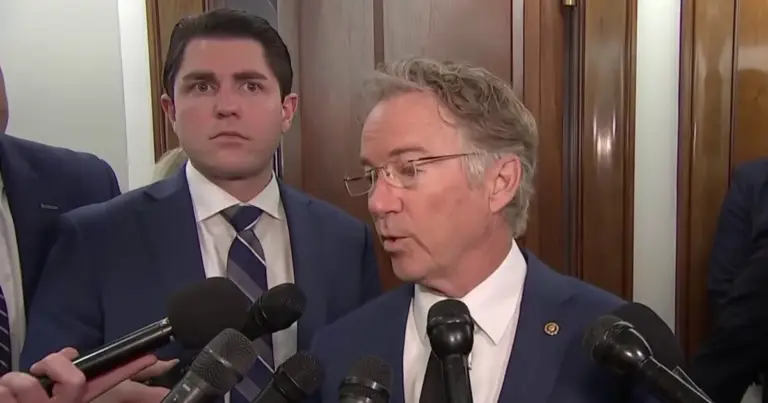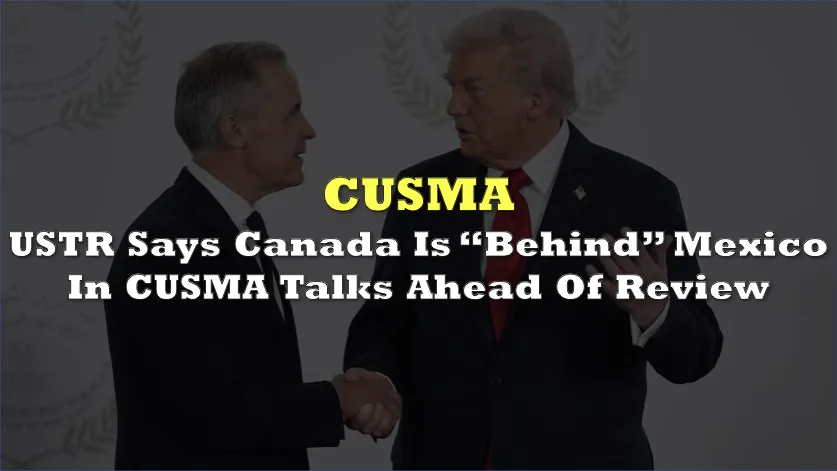
“We’re having talks separately with Canada, but we’ve moved along with Mexico. Canada is behind on this with Mexico,” stated Jamieson Greer, a key figure in the ongoing discussions surrounding the Canada-United States-Mexico Agreement (CUSMA) review. This statement underscores the current state of negotiations as the three nations prepare for a scheduled joint review of the trade agreement, which is set to run through 2036.
Greer’s remarks come amid a backdrop of evolving trade dynamics and ongoing discussions. On March 5, the United States and Mexico formally initiated bilateral discussions in preparation for the joint review, indicating a more defined review track with Washington compared to Canada. Greer has indicated that while talks with Canada are ongoing, they have not progressed as far as those with Mexico.
Earlier this month, Greer met with Canada-US Trade Minister Dominic LeBlanc in Washington. LeBlanc expressed optimism regarding the renewal of CUSMA, suggesting that he was “not pessimistic” about the outcome and expected targeted changes rather than a complete renegotiation. This sentiment reflects a desire among Canadian officials to maintain the framework of the agreement while addressing specific areas of concern.
Despite the optimism, Canada remains subject to U.S. tariffs on steel, aluminum, autos, lumber, and cabinets, which complicates the trade relationship. Greer has voiced concerns about Canadian domestic measures that he sees as impediments to bilateral talks, a situation that has roots in the Trump administration’s previous investigations under Section 301 of the Trade Act of 1974 into Canadian trade practices.
Negotiators are currently focused on tightening rules of origin between the United States and Mexico, a move that Greer has framed as a necessary guard against Mexico becoming a transshipment hub for goods originating in other markets. This tightening of regulations is seen as crucial for ensuring that the benefits of CUSMA are realized by the intended parties.
The wider bilateral relationship has been described by unnamed officials as “upended by the president’s tariffs and territorial threats.” This characterization highlights the complexities that continue to affect trade relations between the U.S. and its northern neighbor, as well as with Mexico. The ongoing negotiations are critical, as failure to agree on extending CUSMA could lead to annual reviews, with any member able to exit the agreement with six months’ notice.
As the discussions progress, the focus remains on how to navigate the differing priorities of each country. While Greer has acknowledged that some parts of CUSMA “function fine,” Washington is seeking greater market access in selected areas. The outcome of these negotiations will likely shape the future of trade relations in North America.
What observers say
Observers are closely watching the developments in the CUSMA review process, noting that the outcomes will have significant implications for trade policies in the region. As the situation evolves, details remain unconfirmed regarding the specific changes that may be proposed or agreed upon in the upcoming discussions.