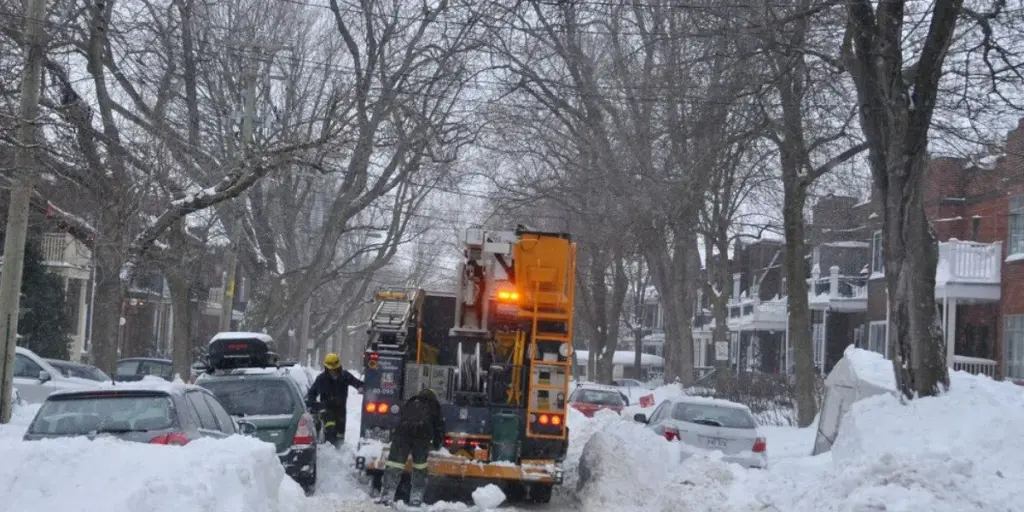
The March 17 hydro power outage shows how fast a Quebec wind storm can strain overhead networks. High winds caused power outages for hundreds of thousands of Quebecers, with over 315,000 Hydro-Québec clients affected at the peak of the storm.
By 8:30 p.m. on the same day, the number of customers without power had dropped to below 80,000. Wind gusts reached up to 120 kilometers per hour in some areas, leading to significant disruptions.
Hydro-Québec dispatched more than 1,100 workers to restore power, focusing on the hardest-hit regions, including Montérégie, Lanaudière, Laurentians, Montreal, Laval, and Capitale-Nationale.
Several schools, such as Soulanges Elementary School and Pierrefonds Community High School, were closed due to the outages. The Exo commuter train service also reported weather-related delays and cancellations, with some trains running up to three hours late.
A roof was blown off a building in Trois-Rivières, causing damage to a parked car, illustrating the storm’s impact on infrastructure. Environment Canada had issued yellow wind warnings for several areas, including Greater Montreal, as the storm progressed.
The outages were primarily caused by debris from trees and branches hitting power lines. Restoration of power may take 24 to 48 hours for many customers, depending on the extent of the damage.
Simon Legault noted, “So everybody is going to get some high winds at some point during the day and maybe [the] evening for the eastern part of the province.” Meanwhile, Environment Canada warned that the winds could cause damage to structures such as roofs, fences, and soft shelters.
François Legault remarked on the unusual weather patterns, stating, “The same system that brought mild temperatures on Monday also caused a severe winter storm to slam into Quebec’s Abitibi-Témiscamingue region.” As the situation develops, officials continue to monitor the aftermath of the storm and its effects on the community.