What does Honda’s recent decision to cancel its electric vehicle models signify for the future of the automotive industry? The answer lies in the company’s acknowledgment of declining demand for electric vehicles (EVs) and a strategic pivot towards gasoline and hybrid models.
Honda has officially canceled the development and market launch of the Honda 0 Series models and the electric Acura RSX, stating that the current business environment is not conducive to launching new EVs. A representative from Honda remarked, “Honda determined that starting production and sales of these three models in current business environment where the demand for EVs is declining significantly would likely result in further losses over the long term.” This decision reflects a broader trend in the automotive sector as manufacturers reassess their EV strategies amidst changing market conditions.
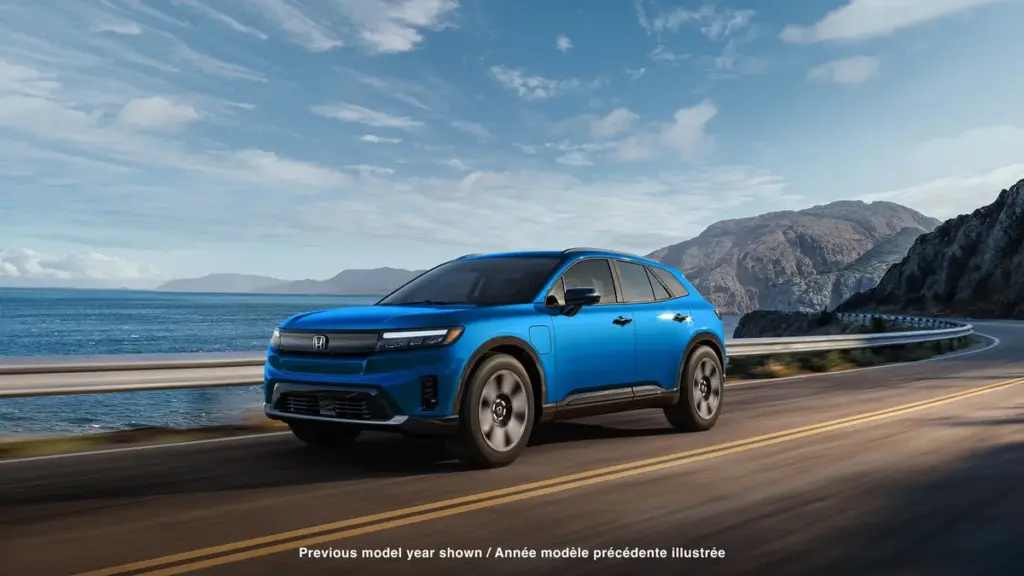
In addition to canceling these models, Honda is set to end production of its Prologue EV by December 2026. Sales figures for the Prologue have been disappointing, with only 1,731 units sold in the U.S. through the first two months of 2026, marking a staggering 75% decline year-over-year. This decline is particularly concerning given that Honda had forecasted total Prologue sales of 39,000 units for 2025. The Prologue, which was built by General Motors at its Ramos Arizpe facility in Mexico, had a starting price of $47,400 and offered up to 308 miles of EPA-estimated range.
Honda’s decision to cancel the Prologue is part of a larger shift in its EV strategy in North America. The company recorded a multi-billion-dollar write-down tied to its EV investments, amounting to $15.7 billion in restructuring costs. As competition in the EV market intensifies, particularly from manufacturers in China, Honda has found it increasingly challenging to maintain a competitive edge. A Honda spokesperson noted, “The situation changed far more rapidly than we expected. The suspension of EV subsidies in North America undercut growth, and competition in China meant we couldn’t provide attractive models or maintain our competitive edge.”
As Honda pivots away from electric vehicles, it is now focusing on increasing production of gasoline and hybrid vehicles. This strategic shift raises questions about the company’s long-term vision and its ability to adapt to the evolving automotive landscape. While Honda had showcased electric vehicle concepts at CES 2024 and CES 2025, intending to bring them to market in 2026, the recent cancellations indicate a significant change in direction.
The implications of Honda’s decision extend beyond the company itself, as it reflects broader trends in the automotive industry. Many manufacturers are grappling with the challenges of transitioning to electric mobility while maintaining profitability. As consumer preferences shift and regulatory pressures increase, companies must navigate a complex landscape that balances innovation with financial viability.
Looking ahead, it remains to be seen how Honda will adapt its strategy in response to these challenges. The automotive industry is in a state of flux, and Honda’s recent decisions may signal a more cautious approach to electric vehicle development in the near future. Details remain unconfirmed regarding any potential new models or initiatives that Honda may pursue as it shifts its focus back to traditional gasoline and hybrid vehicles.