What observers say
“Eid al-Fitr literally means ‘festival of breaking the fast,'” noted a community leader, emphasizing the significance of this joyous occasion for Muslims worldwide. This year, Eid al-Fitr is expected to fall on the night of March 19 or March 20, 2026, depending on the sighting of the crescent moon. In Morocco, astronomers predict that the celebration will take place on March 21, 2026, marking the end of Ramadan, a month of fasting and reflection.
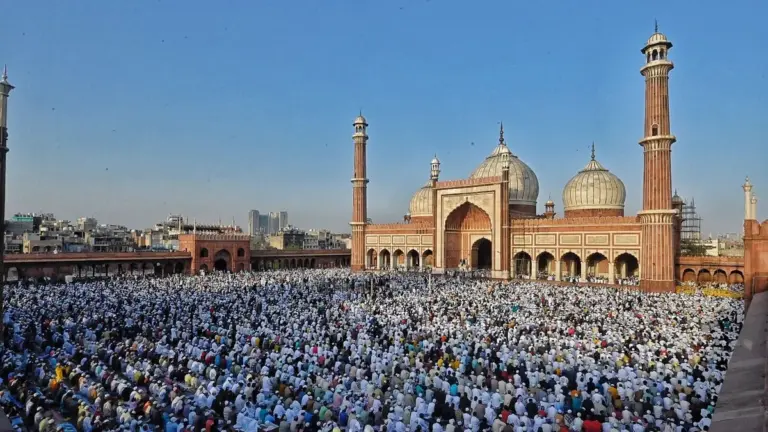
As the first day of Shawwal, Eid al-Fitr is a time for Muslims to come together in celebration. The holiday is characterized by communal prayers, festive meals, and the giving of Zakat al-Fitr, a charitable donation made before the Eid prayer. This practice ensures that all members of the community can partake in the festivities, particularly those in need.
During this time, many Muslims greet each other with the phrase “Eid Mubarak,” which translates to “blessed festival” in Arabic. Families often gather to share meals and enjoy each other’s company after a month of fasting. “Eid is also a time when Moroccans celebrate a few days off as a holiday, which allows people who live outside of their hometown to travel back and celebrate the feast with their families,” explained a local resident.
The observance of Eid al-Fitr is not only a spiritual event but also a significant social occasion. It is estimated that over 2 billion Muslims around the world will participate in the celebrations. In Morocco, the observance of Ramadan began on February 19, 2026, and the anticipation for Eid al-Fitr builds as the month progresses.
Details remain unconfirmed regarding the exact date of Eid al-Fitr, as the sighting of the crescent moon is crucial for determining the festival’s start. Many Muslim communities rely on Saudi Arabia’s official moon sighting to confirm the date, which can sometimes lead to discrepancies between different regions. In 2026, the expected crescent moon sighting is anticipated on March 18 or March 19.
As Eid approaches, preparations intensify, with families planning gatherings and meals to celebrate the end of Ramadan. Eid celebrations may last for up to three days in some communities, allowing for extended family reunions and shared joy. The festival serves as a reminder of the importance of community and charity, reinforcing bonds among families and friends.
Looking ahead, the next major Islamic holiday, Eid al-Adha, is predicted to fall on the evening of May 26, 2026, and will conclude on the night of May 27. As the Muslim community gears up for Eid al-Fitr, the spirit of togetherness and gratitude remains at the forefront of the celebrations.