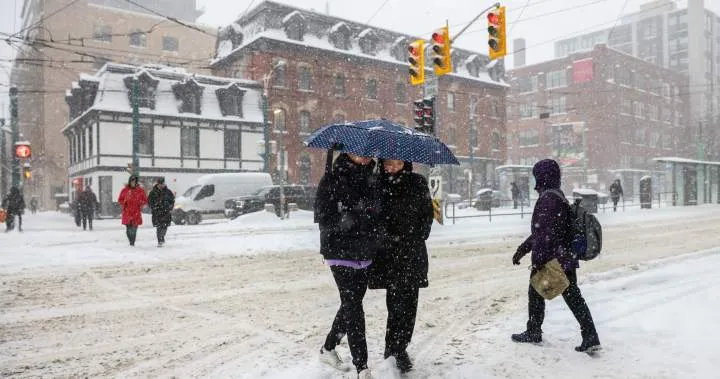
As Winter Storm Iona continues to unfold, the Upper Midwest and parts of Canada are experiencing significant weather disruptions. Just before the storm’s peak, residents were warned of the impending blizzard conditions, which have now materialized across the region.
On the evening of the storm’s onset, Wausau, Wisconsin, recorded an astonishing 23.4 inches of snow, setting an all-time record for a single day. This extreme snowfall has raised concerns about travel safety and accessibility in the area.
As the storm progressed into the following days, central Ontario issued an orange alert winter storm warning, anticipating snowfall between 10 to 20 cm. Wind gusts reaching 70 to 80 km/h are also expected, further complicating conditions.
In British Columbia, Metro Vancouver is facing heavy rains due to a prolonged atmospheric river, with forecasts predicting 100 to 150 millimeters of rain. Inland areas of the Central Coast could see 30 to 40 cm of snow between Sunday and Tuesday morning, adding to the winter woes.
Meanwhile, Quebec is bracing for snowfall of 20 to 40 cm, while southern and central New Brunswick could experience 20 to 40 mm of rain starting Monday afternoon. These weather patterns are creating hazardous conditions across multiple provinces.
In Alberta, wind chills are expected to plummet to -40°C in northeast and northwest regions, posing additional risks to residents. The combination of heavy snowfall and extreme cold is a significant concern for safety and travel.
As of now, the storm’s impact continues to be felt, with authorities urging residents to stay indoors and avoid unnecessary travel. The sequence of events is critical for those involved, as the severe weather poses risks to life and property.
Winter Storm Iona has generated prolific snow totals in parts of the Midwest, illustrating the power of winter weather systems. The ongoing situation remains dynamic, with updates expected as conditions evolve.
Details remain unconfirmed regarding the full extent of the storm’s impact in some areas, but the current forecasts indicate that the worst may not be over yet.
Residents are advised to monitor local weather reports and heed any warnings issued by authorities to ensure their safety during this severe weather event.