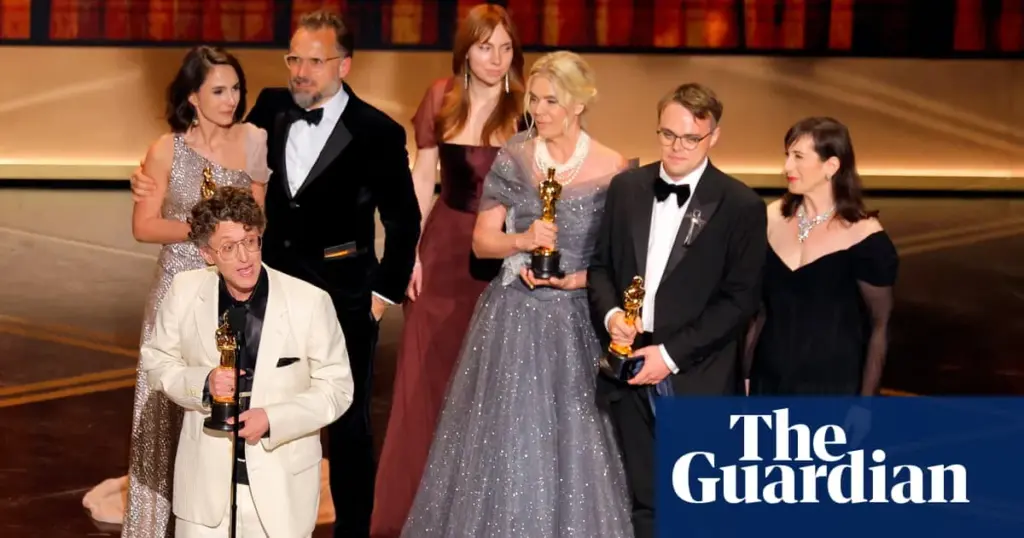
The film Mr Nobody Against Putin, directed by Pavel Talankin and David Borenstein, has recently won the Oscar for Best Documentary. This recognition comes as the film sheds light on the indoctrination of students in support of Russia’s invasion of Ukraine, a pressing issue in contemporary geopolitics.
Talankin, a primary school teacher who is currently in exile in Europe, documented his experiences and the challenges faced by educators in Russia. The film uses two years of footage shot by Talankin, who fled Russia in the summer of 2024, capturing the harsh realities of life under an oppressive regime.
In February 2026, Mr Nobody Against Putin also won a BAFTA award for Best Documentary, further solidifying its impact and relevance. The film has been described as a “touching, intimate chronicle” by The Hollywood Reporter, highlighting the personal stories behind the broader political narrative.
David Borenstein, the film’s US co-director, stated, “Mr Nobody Against Putin is about how you lose your country.” This sentiment resonates deeply with audiences, as it reflects the struggles faced by many in Russia today.
Pavel Talankin emphasized the urgency of the message, saying, “In the name of our future, in the name of all of our children, stop all of these wars now.” His words echo the sentiments of those who have suffered under the weight of conflict and oppression.
As the film continues to gain traction, observers note that this is the third time this decade that a film critical of the Russian government has won the Oscar. This trend highlights a growing international awareness and condemnation of the actions taken by the Russian state.
Talankin’s personal story of persecution is woven throughout the film, providing a powerful narrative that resonates with viewers. He remarked, “If you had told me two years ago that things would be like this, I would have laughed in your face,” reflecting on the rapid changes in his life and the political landscape.
As the documentary gains more recognition, it is expected to spark further discussions about the role of media and art in challenging authoritarian regimes. The film’s success may encourage more filmmakers to explore similar themes, pushing for change through storytelling.
Details remain unconfirmed regarding future screenings and discussions surrounding the film, but its impact is already being felt across various platforms.