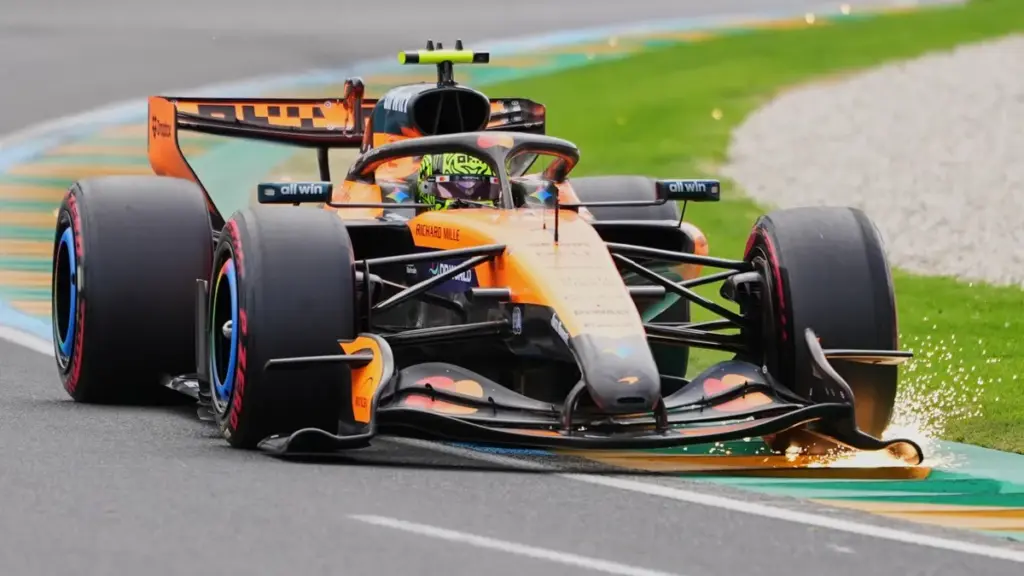
Lando Norris Critiques New Formula 1 Regulations Following Australian Grand Prix
Lando Norris, the McLaren driver, qualified sixth in the Australian Grand Prix held in Melbourne, where he expressed significant concerns regarding the new Formula 1 regulations. These regulations, which have introduced a 50:50 power split between a turbocharged 1.6-liter V6 engine and electrical energy, have led Norris to describe the current state of F1 cars as a drastic decline in quality.
In his statements, Norris remarked, “We’ve come from the best cars ever made in Formula 1, and the nicest to drive, to probably the worst.” This criticism highlights the dramatic shift in performance and drivability that drivers are experiencing under the new rules. Norris’s sentiments are echoed by many in the paddock who are grappling with the complexities introduced by the latest regulations.
During the race weekend, Norris faced reliability issues that hampered his practice sessions, further complicating his adaptation to the new hybrid engines, which are now powered 50% by sustainable fuels and 50% by electric power. These changes have not only altered the performance dynamics of the cars but have also increased the complexity of energy management for drivers.
After finishing fifth in the race, Norris continued to voice his concerns, labeling the 2026 regulations as “very artificial” and warning that they could lead to dangerous situations on track. He noted that the closing speeds of 30-50 kph could create chaotic scenarios, stating, “It’s chaos, you’re going to have a big accident, which is a shame.” Such remarks underline the potential safety risks that the new regulations may pose to drivers and teams alike.
The introduction of the 2026 regulations has been a significant shift for Formula 1, with changes affecting both the chassis and power unit of the cars. This overhaul aims to enhance sustainability in the sport but has also raised questions about the balance between performance and safety.
Norris’s experiences and criticisms reflect a broader sentiment among drivers who are adjusting to the new landscape of Formula 1. As teams continue to adapt to these regulations, the feedback from drivers like Norris will be crucial in shaping future discussions about the sport’s direction.
As the season progresses, it remains to be seen how these new regulations will affect the competitive landscape of Formula 1 and whether adjustments will be made in response to the concerns raised by drivers. Details remain unconfirmed regarding any potential changes to the regulations based on this feedback.