Background of Tensions
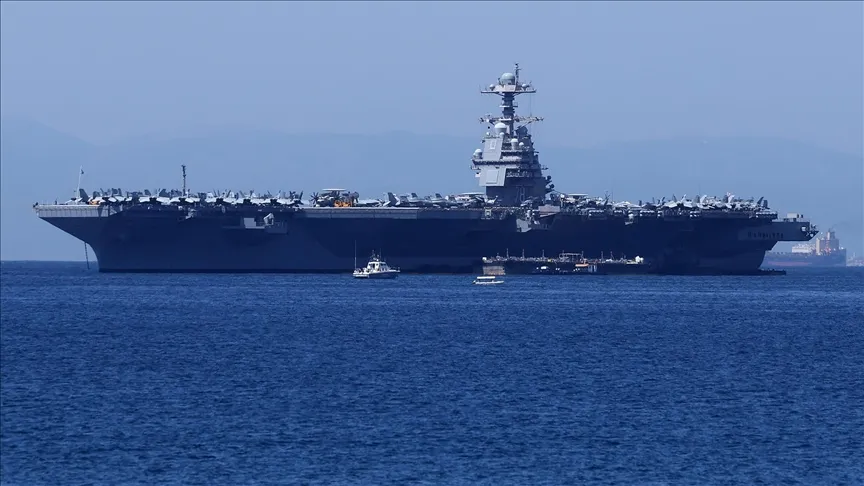
The military tension in the Gulf and Middle East has escalated significantly, with multiple attacks reported against the USS Abraham Lincoln. Prior to these developments, the USS Abraham Lincoln, a Nimitz-class aircraft carrier weighing over 100,000 tons, was operating in the region with the expectation of maintaining a stable presence amidst rising tensions.
Recent Attacks
Recently, Iranian armed forces claimed to have launched a naval missile attack against the USS Abraham Lincoln. This incident marks the second attack against the vessel in a matter of days, following an earlier assault that involved long-range drones targeting the carrier.
Details of the First Attack
During the first attack, the USS Abraham Lincoln was approximately 300 kilometers from the Strait of Hormuz. The proximity to this critical maritime chokepoint heightened concerns regarding the safety of U.S. naval assets in the region.
Retreat and Vulnerability
In response to these threats, the USS Abraham Lincoln was reportedly forced to retreat over 1000 kilometers to reduce its vulnerability to Iranian strikes. This strategic withdrawal underscores the shifting dynamics of naval operations in the Gulf.
Mischaracterization by Iran
Interestingly, Iran’s military communication referred to the USS Abraham Lincoln as a destroyer, which is incorrect as it is an aircraft carrier. This mischaracterization may reflect the broader narrative being constructed around the conflict.
Iran’s Military Strategy
Iran has developed a maritime strategy based on saturation and dispersion of strike capabilities, which complicates the operational environment for U.S. forces. This approach aims to overwhelm adversaries with multiple simultaneous threats.
Expert Perspectives
Experts suggest that these developments confirm that the naval confrontation between the two powers is entering a particularly dangerous phase. The implications of these attacks could have far-reaching consequences for U.S.-Iran relations and regional stability.
As the situation evolves, details remain unconfirmed regarding the full extent of the attacks and their implications. The ongoing military engagements highlight the precarious nature of security in the Gulf region and the challenges faced by naval forces operating in contested waters.