Overview of the Situation
In the wake of escalating tensions in the Middle East, the iconic Burj Al Arab hotel in Dubai has found itself at the center of a troubling incident. Following coordinated military actions by the United States and Israel against Iran, Iranian forces retaliated, leading to significant unrest across the region.
Details of the Incident
On February 28, a missile strike reportedly hit the luxurious Fairmont hotel located on Palm Jumeirah, igniting a fire near its entrance. Witnesses described chaotic scenes as smoke billowed from the five-star establishment, a key attraction in Dubai.
Video footage verified by CNN captured the moment debris, believed to be from a rogue missile, struck the ground, causing the fire. The Dubai Media Office later confirmed that an “incident occurred in a building in the Palm Jumeirah area,” resulting in four injuries.
Impact on Burj Al Arab
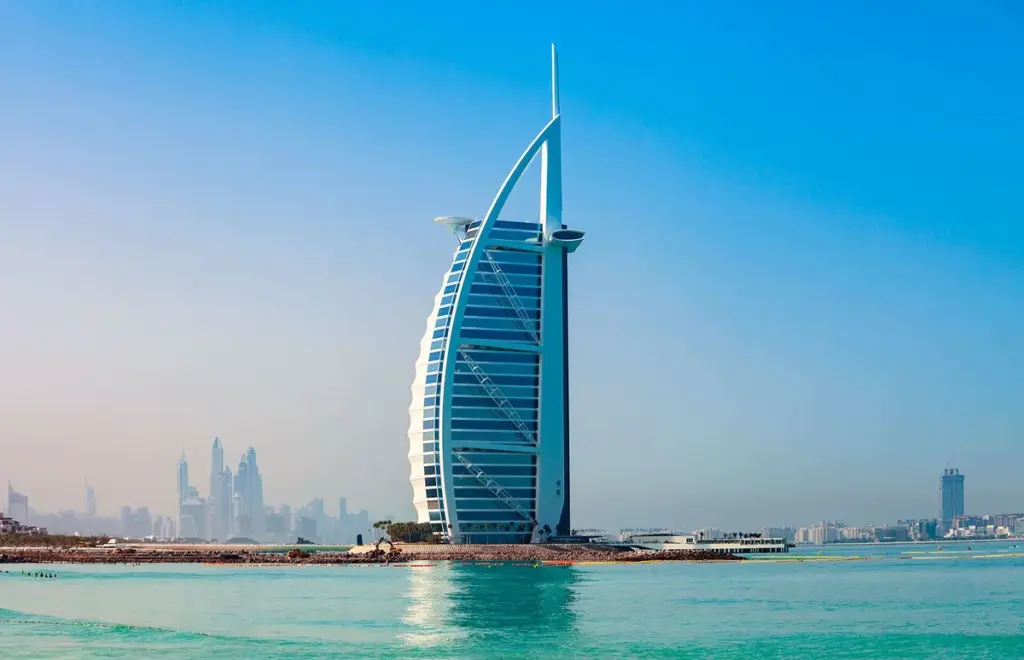
Debris from intercepted aerial threats also caused a fire at the Burj Al Arab, one of Dubai’s most recognizable landmarks. The Dubai Media Office reported that the incident led to a “minor fire” on the hotel’s outer facade, with no injuries recorded.
Emergency response teams were quickly deployed to manage the situation, ensuring that the fire was contained. The government reassured the public that the incident was under control and that safety measures were in place.
Flight Operations Affected
As a result of the ongoing crisis, Dubai International Airport has suspended all flight operations until further notice. Passengers have been advised to refrain from traveling to the airport and to check with their airlines for updates regarding their flights.
Air Canada has also announced the suspension of all flights to and from Dubai and Tel Aviv, emphasizing the safety of its passengers as a top priority. The airline has revised its ticketing policy to allow affected customers to change their bookings without penalties.
Broader Implications
The conflict has led to significant disruptions in air travel across the region, with several countries, including Bahrain, Iran, Iraq, and Qatar, announcing partial airspace closures. This has resulted in the cancellation of over 1,800 flights, stranding thousands of travelers worldwide.
Additionally, cruise lines are on high alert, with some vessels, like MSC Euribia, opting to remain docked in Dubai rather than continue their itineraries due to the ongoing situation.
Government Advisories
Global Affairs Canada has issued a travel advisory, warning citizens of the deteriorating security situation in the Middle East. Canadians in the region are urged to monitor local media and be prepared to shelter in place if necessary.
Prime Minister Mark Carney has expressed support for U.S. actions aimed at preventing Iran from acquiring nuclear capabilities, highlighting the potential for increased instability in the region.
Conclusion
The situation remains fluid, with ongoing military activity and heightened tensions across the Gulf. As developments unfold, travelers and residents alike are advised to stay informed and prioritize their safety.